28 Years Later (2025)… and the Franchise Has Still Got It
Title: 28 Years Later
First Non-Festival Release: June 18, 2025 (Theatrical Release)
Director: Danny Boyle
Writer: Alex Garland
Runtime: 115 Minutes
Starring: Jodie Comer, Aaron Taylor-Johnson, Ralph Fiennes, Alfie Williams
Where to Watch: Check out where to find it here
Going through its own political turbulence over the past decade, the United Kingdom has seen a rise in nationalism sparked by fervor over immigration, gender-based violence, and other controversial issues. In the 28 Days Later franchise, these larger trends in the country are dissected to better understand the experience of the average British person.
Almost thirty years after the initial viral outbreak that devastated the country, the rage virus continues to devastate the effectively empty Island of Great Britain. 12-year-old Spike (Alfie Williams) lives with his distant but passionate father (Aaron Taylor-Johnson) and his ailing mother (Jodie Comer). Eager to pass his village’s coming-of-age ritual, Spike heads out to the mainland with his father to retrieve supplies and kill his first infected. Once outside the walls of their village, the duo will be on their own. Barely escaping with their lives, they complete their mission. Spike is pushed back out there, however, when he realizes the cure for his mother’s illness lies with a mysterious doctor (Ralph Fiennes).
28 Years Later continues the series trend of atypically tackling infection-based horror without skimping on the terror.
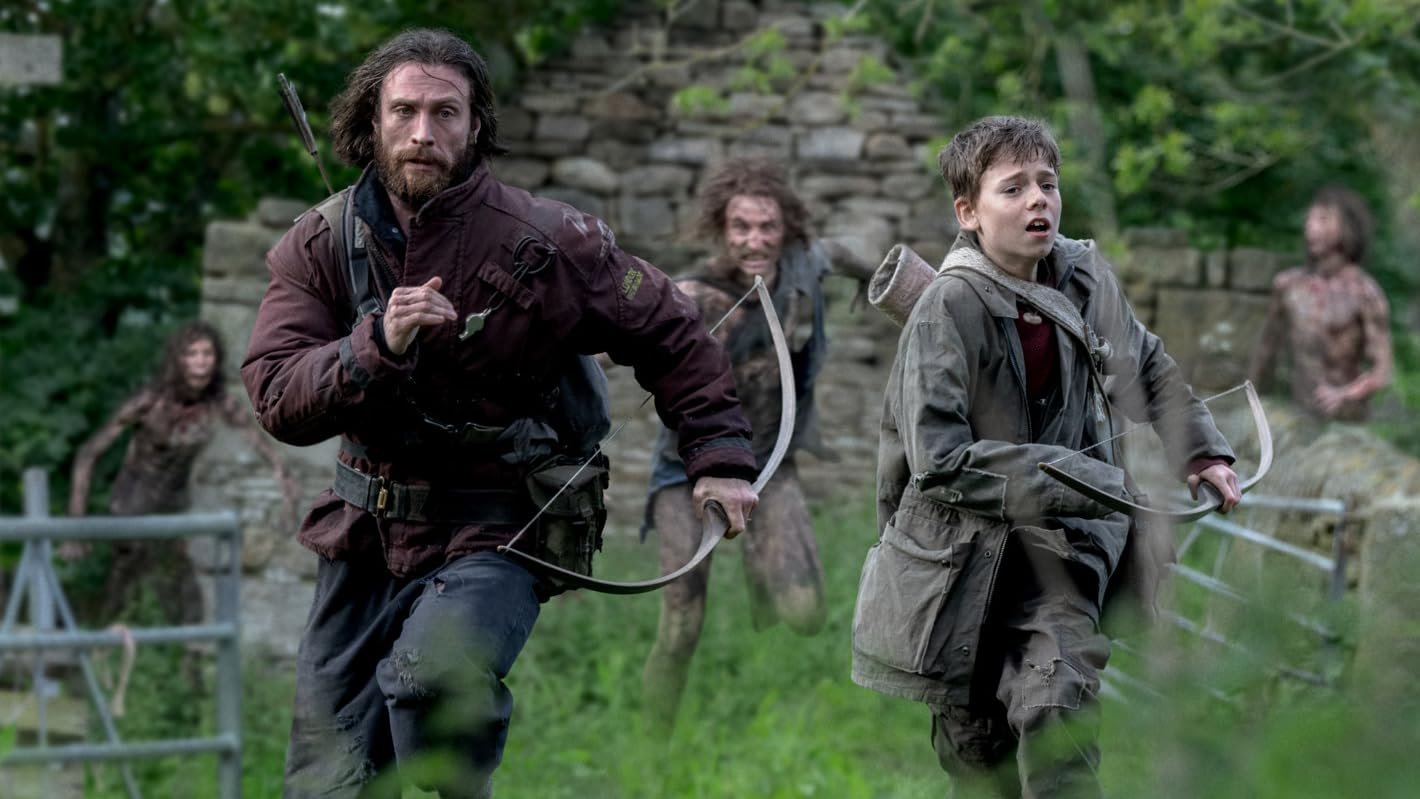
Shifting to a coming-of-age focus, 28 Years Later details what it is like to be born in madness and how that remains with you. Spike’s world is chaos but that’s all he’s ever known. Shaped by his village’s isolated existence, it’s not until Spike ventures out into the world where he begins to come into himself. Learning from his environment, adapting to various challenges, and coming to terms with his messed-up childhood, Spike continues despite his upbringing. Surrounded by bravado and death, Spike chooses another path than the one set before him, and it’s not shocking that he is inspired by his mother’s warmth and suffering rather than the idea of killing for his village. Spike’s character arc becomes an antithesis to various avenues of harmful displays of masculinity. It’s a fascinating study on the ways masculinity is shaped by society and the ways men can push back on that idea.
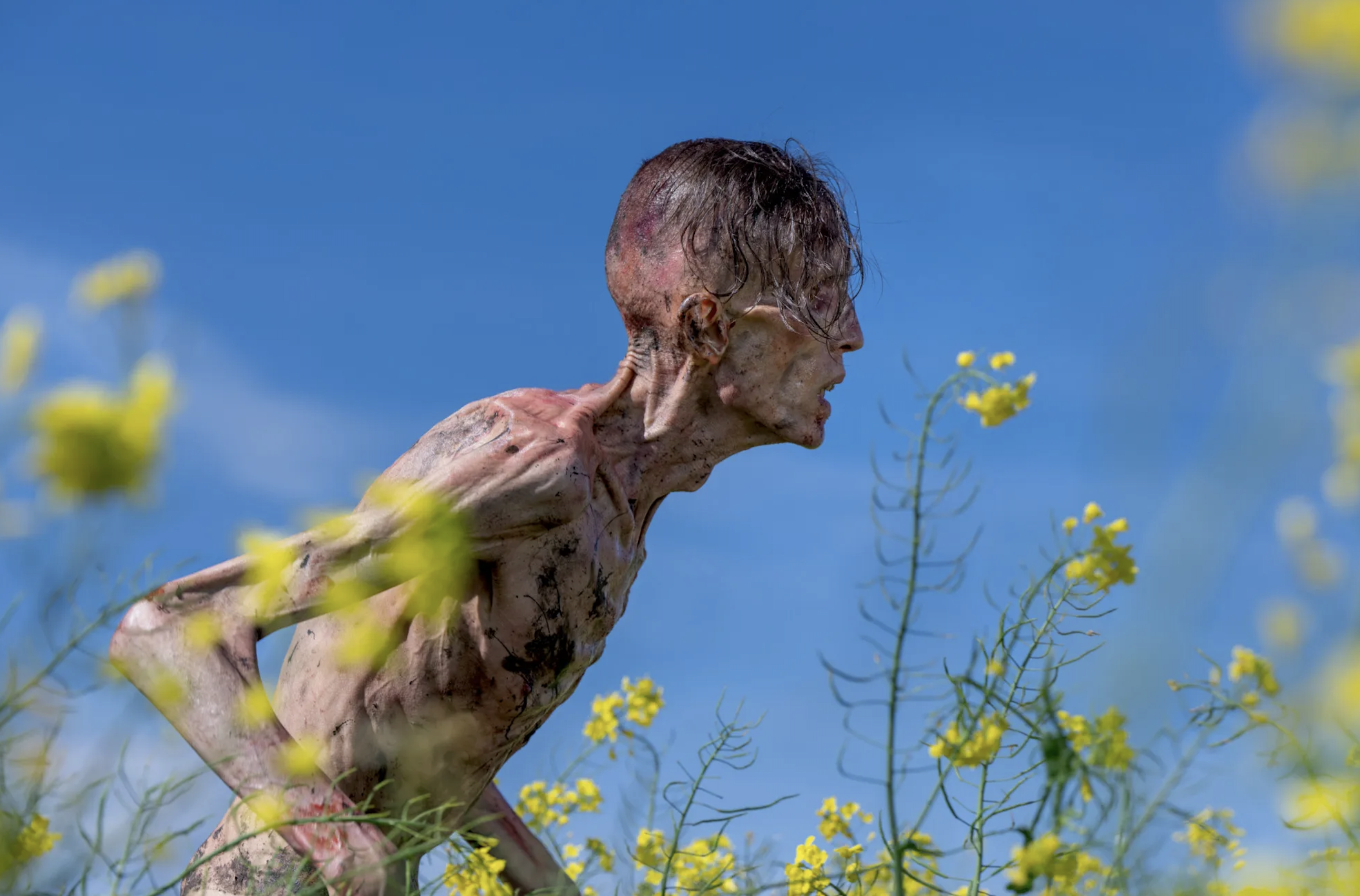
Offering thoughtful commentary on the ways unchecked masculinity attacks, torments, and haunts its characters, 28 Years Later redefines what makes a man while still opining on Britain’s response to rising sentiments of nationalism. In Spike’s journey, he meets several men, all with varying degrees of traditional masculinity associated with them. From his boorish father to the isolationist doctor, each man represents different forms masculinity can take. His father is traditional in the sense that he embodies typical masculine traits to romanticize the hero’s journey. To be a man is to prove your worth to your community by putting oneself in danger for their approval. A selfish kind of masculinity that prioritizes status above function, one where he has no problem risking his life, as well as his son’s, out in the wilderness but how dare his son threaten to expose his cheating. Other archetypes are depicted too: the detached mercenary, irritated at how the war has interrupted his life so much, a doctor obsessed with the legacy of death, and even the Alpha Zombie, a projection of society’s fears of “ethnic” men, which becomes a staple in 28 Years Later. Spike is who remains, a tabula rosa soaking up all the information that these men knowingly and unknowingly impart upon him.
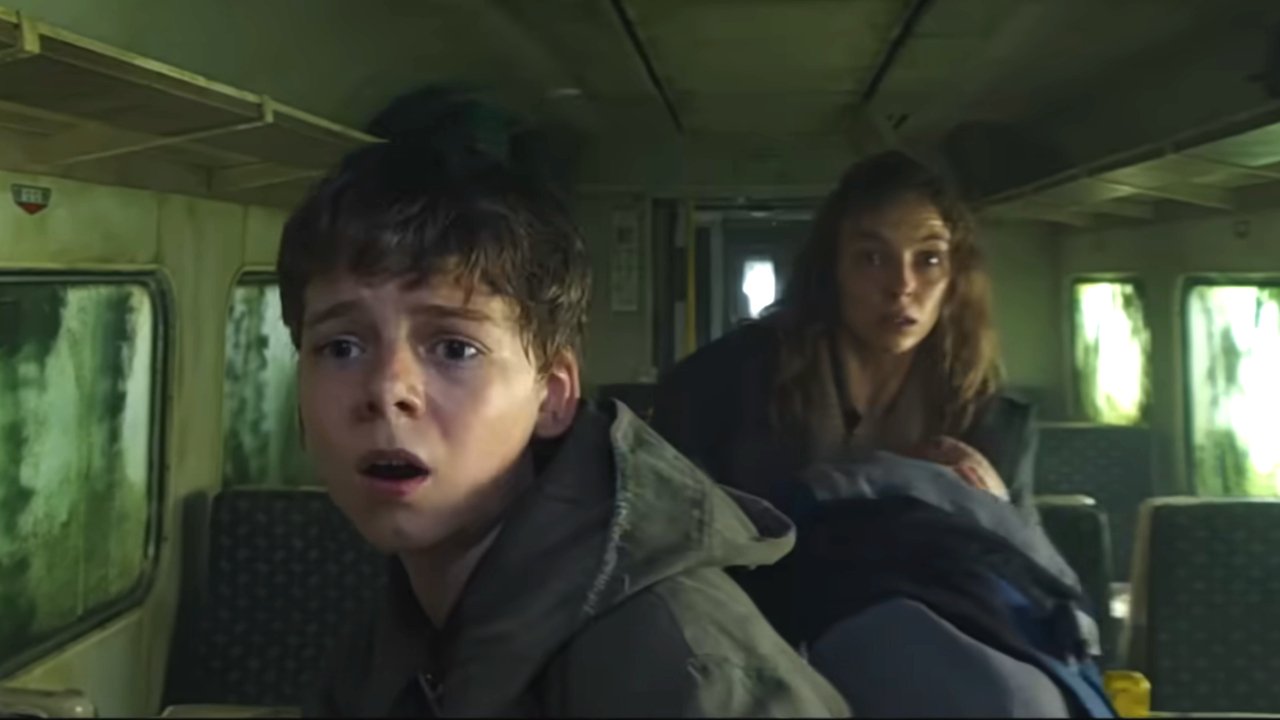
Exceptional performances from its leads make the fear and drama even more compelling. Alfie Williams has the herculean task of carrying on through the entirety of 28 Years Later, and he does an excellent job as a young performer. Bringing depth and maturity to the role, Williams balances Spike’s desire for manhood with his dwindling childlike demeanor. As the film presses on and Spike endures the toil of survival, his innocence fades, an apt metaphor for the ways that growing up strips kids of their hope for a better world. Jodie Comer guides the second half, playing Spike’s deteriorating mother with zeal. Taking on the atypical character arc with passion, Comer holds the weight of her condition with a light weariness only matched by her whimsy. The quiet sojourn into the heart of the apocalypse wouldn’t work without her. Of course, Aaron Taylor-Johnson and Ralph Fiennes give incredible performances for their limited screen time too.
The infected are still as potent as ever, with new horrors emerging to torture the ever-dwindling number of survivors trying to scrape by in the United Kingdom. Director Danny Boyle and writer Alex Garland have plenty of tricks up their sleeve to subvert expectations on their 2025 follow-up. Shifting the tone, pacing, and formula to what makes the original 28 Days Later work, 28 Years Later takes a step back to really break down the apocalypse. Breathless action horror set pieces, brutal kills, and a compelling main infected antagonist make the horror deliciously visceral.
Fans of the original franchise may be taken aback by its stranger take on the apocalypse, but filmgoers of all stripes can rejoice in the efforts 28 Years Later takes to say something meaningful. Capturing the energy of a fraught political environment, 28 Years Later uses its violence as an avenue for catharsis. Anchored by a strong cast, excellent production elements, and great scares, this post-apocalyptic horror is well worth seeking out. If 28 Years Later is anything to indicate the quality of this new trilogy, horror fans are in for a treat these next few years.
Overall Score? 8/10