A Mother Descends into Madness in Supernatural Horror Drama Nesting (FANTASTIC)
Title: Nesting
First Non-Festival Release: October 3, 2025 (Limited Theatrical Release)
Director: Chloé Cinq-Mars
Writer: Chloé Cinq-Mars
Runtime: 103 Minutes
Starring: Rose-Marie Perreault, Simon Landry-Désy, Marie Bélanger
Where to Watch: Check out where to find it here
This film’s review was written after its screening at the Fantastic Film Festival in 2025.
Women often bear the burden of childcare in many societies. In western countries, however, there is a distinct lack of a “village” present to assist new mothers with the titanic effort. It’s this rugged individualism that leads to mothers crumbling under the weight of their responsibilities and societal expectations.
Penelope (Rose-Marie Perreault) is struggling as a new mother. Her live-in boyfriend (Simon Landry-Désy) is still stuck in his party boy days, her family is unable or unwilling to ease the burden off her, and she finds herself catching glimpses of her late sister, Charlotte (Marie Bélanger), as she goes about her day. Her situation gets more dire when she survives a robbery at a grocery store. As she struggles to maintain her sanity while caring for her newborn, these visions of Charlotte become stronger, threatening her safety and her family’s too. With her world crumbling around her, Penelope watches helplessly as everyone around her lets her drown. Or is that just what her mind is telling her?
Technically proficient but plodding at times, Nesting is an aggressively fine psychological horror.
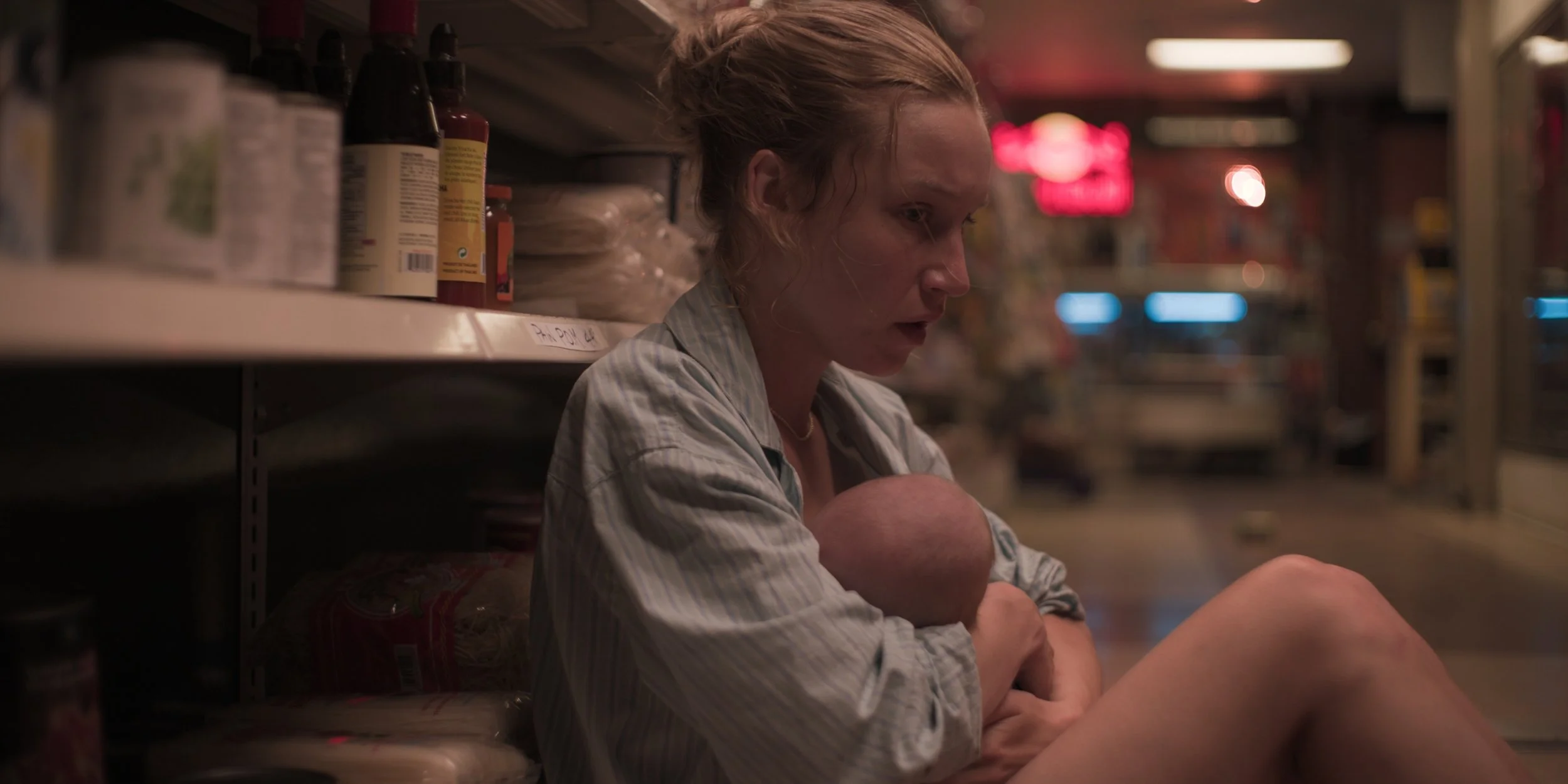
Much of Nesting is predicated on the idea that women are alone with their pain, worsening the effects of post-partum depression and other serious ailments that directly affect mothers. It’s impossible to take care of a child perfectly but everyone in Nesting cannot resist informing Penelope of all her failures as a mom. It’s exhausting as a viewer to expect disappointment from everyone she interacts with, but it rings true for the greater points Nesting makes on society. Penelope is fed platitudes about how great mothers are and can be while practically screaming for help herself. Nesting shows how damaging and wasteful these attitudes are while not shying away from how deadly it can be to be anti-mother. The various relationships of Nesting bolster these points.
Penelope takes every opportunity to ask for help. It isn’t her fault that the correct response is so difficult to find amongst her circle. The obvious answer in her partner (Simon Landry-Désy) won’t work as he proves himself functionally useless for most of the film. Her mother-in-law is judgmental of her choices, refusing to do more than the bare minimum after begging. All the while, her parents aren’t interested in supporting her either. These abdications of responsibility aren’t local to just people she knows but expands to strangers too. Nesting makes it known that Penelope is on her own, and that isolation is truly the scariest thing to fear in pregnancy.
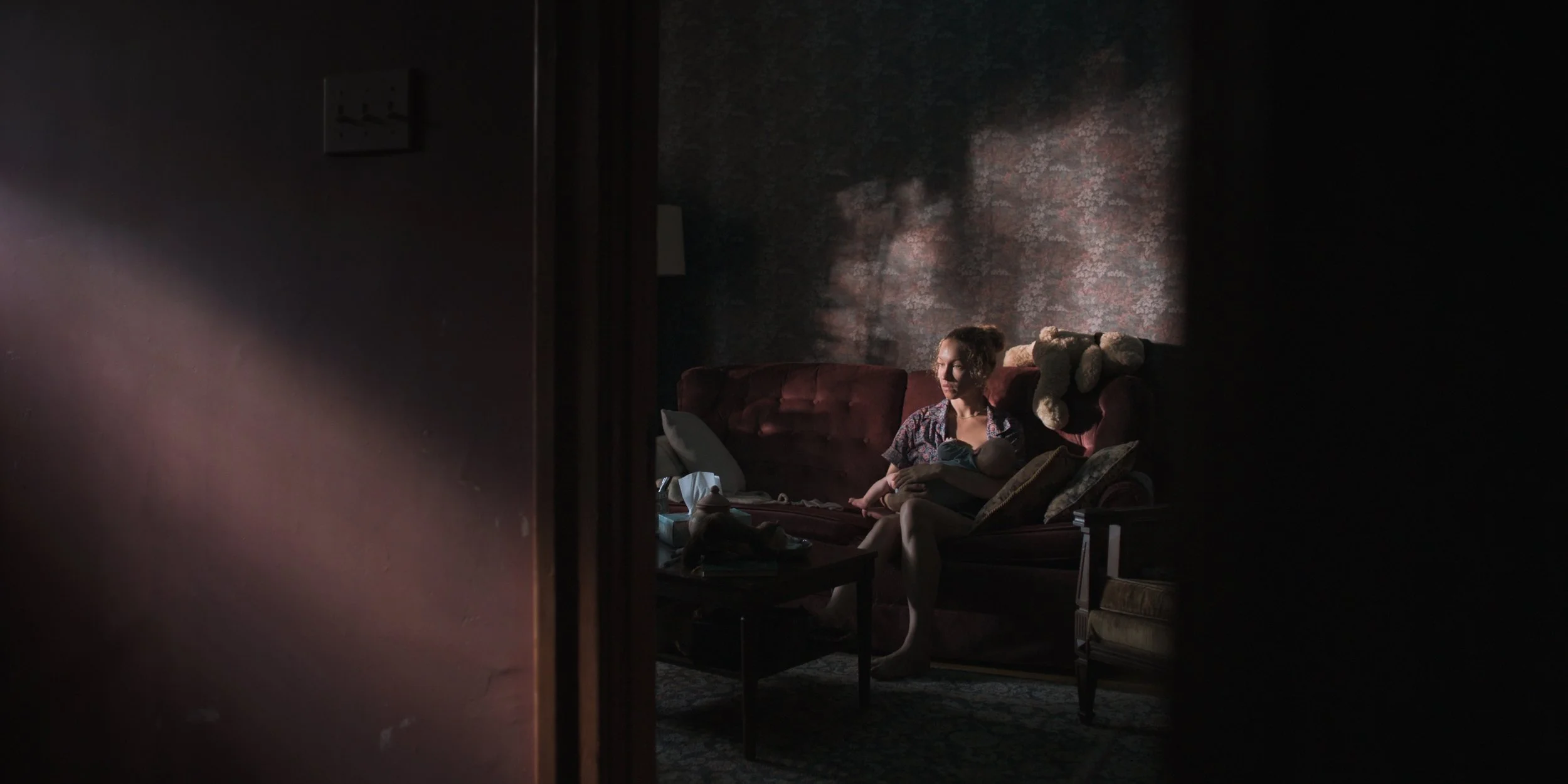
Much of Nesting falls on the shoulders of Rose-Marie Perreault, who unravels Penelope in a grounded manner. Penelope is an average woman in most respects and it’s clear Perreault understands that Nesting works because of this. Vacillating between the psychological and supernatural, Perreault anchors Penelope with a sense of hope. If she can just figure out a way to get some sleep, she can soldier on further. This hope gradually drains from Perreault’s face and voice the further Nesting pushes her. Perreault’s performance does everything necessary to build out Penelope but doesn’t go much further. Nesting works largely because of Perrault’s take on Penelope and the care she takes to make her an honest representation of mothers doing the best with their dealt hands.
What twists the knife into Nesting is its confusing mystery and punishing pacing. Infusing the vaguely supernatural intrusions into Penelope’s life, the story gets muddled quickly between Penelope’s past and present. Ignoring the curious timing, the parallels don’t match up making it difficult to understand what Nesting is trying to say about Penelope and Charlotte in the context of the larger story of a woman navigating her health following childbirth. The mystery is already underwhelming but gets worse with the languid energy Nesting pushes. Sleepwalking from one off-putting scenario to the next, the audience can certainly sympathize with Penelope’s never-ending nightmare. In the end that is what characterizes Nesting: familiarity and slow burn story building.
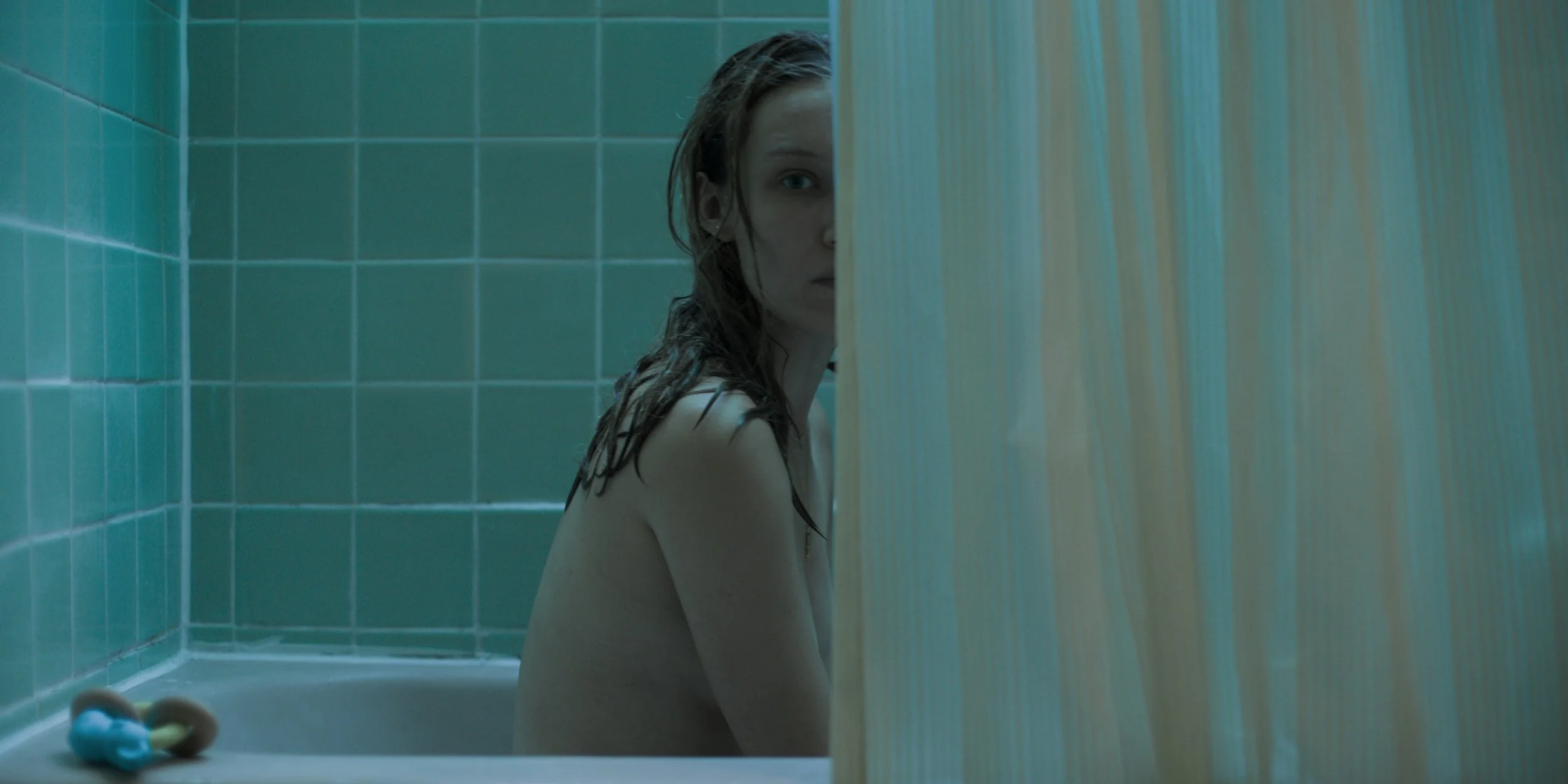
Mileage will vary but Nesting is a solid psychological horror film with something to say that is only impeded by its pacing. A solid leading performance and a dizzying depiction of how vulnerable postpartum depression makes its sufferers, make Nesting worth the watch. It gets lost in its circuitous story but those conditioned to more grounded, muted thrillers will be sufficiently satiated. Motherhood is a terrifying undertaking in its own right. So, it might be worth it to take this journey with Nesting.
Overall Score? 6/10