Title: Posthumous
First Non-Festival Release: TBD
Director: Josh Tanner
Writer: Josh Tanner, Jade van der Lei, Gabriel Bergmoser
Runtime: XX Minutes
Starring: Sophie Lowe, David Roberts, Doris Younane
Where to Watch: Check out where to find it here
This film’s review was written after its screening at the Fantastic Film Festival in 2026.
Ghosts haunt our lives even beyond the constraints of a supernatural horror film. All humans experience loss but less endure true grief. With the weight of a loved one’s presence, or lack thereof, it can be challenging to truly reckon with the actions that lead up to and alongside someone’s passing.
This grief has followed Zoe (Sophie Lowe) her entire life following her mother’s untimely death in childbirth. When a fight with her boyfriend Alex (Remy Hii) leads to Zoe crashing at her childhood home, she and her father (David Roberts) quickly fall into their typical routine. With the unease of unspoken disappointments hanging over their heads, Zoe presses on for answers that have plagued her for 21 years. Her mission leads her next door to Brenda’s (Doris Younane) home. The strange old woman is the key to answering all of Zoe’s questions. Between Brenda’s skittishness and her father’s refusal to talk about what happened, Zoe is on her own. Her life is further endangered when the pull of a strange video tape lures her towards the truth about her birth at a devastating cost.
Posthumous is a well-done indie supernatural horror film that mostly lacks in polish and pacing.
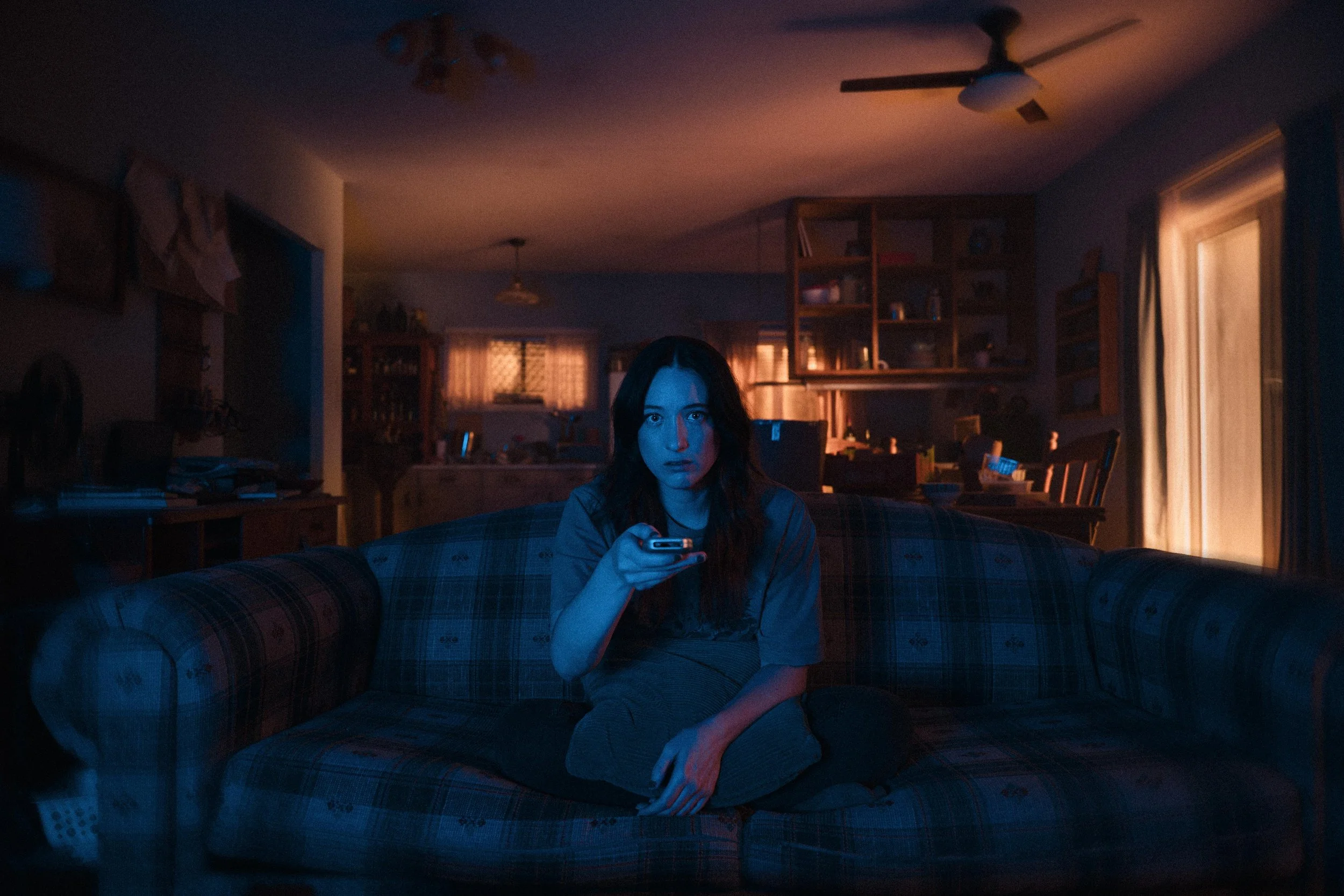
Moody and atmospheric, Posthumous approaches its supernatural horror with a great deal of patience. With few locations necessary to the story, Posthumous spends most of its time in Zoe’s childhood home as well as Brenda’s next door. Both houses look lived in; especially Brenda’s house. While Zoe’s childhood home is sad, cluttered, and dark, Brenda’s captures next door witch energy perfectly. Evocative of character, for sure, Posthumous uses this first act to prioritize the relationships that will drive the plot. The slow burn comes through its unravelling of the central mystery. What calls to Zoe from beyond the static of the television and why is it so insistent on communicating with her? Posthumous eventually answers these questions but is far more interested in what it is trying to say about our relationship with death.
The heart of the story lies in the ways death commands our lives for us far more than life itself does. With her mother’s death shaping Zoe’s relationship with her father and instigating her own future relationship problems, she lives a quiet, miserable life. It’s clear Zoe takes issue with her lot in life, pushing away her boyfriend when he wants to make up, refusing to press further on her half-hearted attempts to connect with her father, and sitting with the chronic emptiness her mother’s absence causes her. This one death has impacted Zoe’s life in ways she likely cannot verbalize. It’s in her decision to embrace her circumstances and move forward, that she is able to stand a chance in her supernatural battle with the demon.
Posthumous warns to live life for yourself, not only because it is the wish of our late loved ones but because it helps the individual and the community. No one person can bear the brunt of loss, and Posthumous shows that when working with each other, humans can defeat their demons every time. It’s cheesy, and other than the obnoxious overuse of VHS static scares and other loud-noise induced jump scares, most of it is well-done and welcome. It’s earnestness in delivering its call-to-action to live in the present works so well because of its focus on character development, particularly with Zoe and her parents.
At a colossal 110-minute runtime, it’s clear Posthumous has plenty to say with its eerie sojourn into demonology and father-daughter forgiveness. Unfortunately, it stretches the relatively simple story out far longer than necessary. Be it prolonged scares, lingering shots, or cyclical conversations, Posthumous gets lost in the details often forgetting the more substantial elements of its story. The deep appreciation for character in Posthumous allows the film to add to its color by giving the cast dimension and weight.
Everyone is written to be frustrating and up their own asses. The melodrama gets repetitive, as the characters consistently shake off each other’s concerns until it’s too late. The patterns are predictable and uninspiring. The story itself struggles against this as the demonic entity only gets cursory attention paid to it. It’s a detriment that Posthumous doesn’t quite know what to do with its antagonist because of this. It’s incredibly designed, even if the budget can’t make it look fully tactile, giving Posthumous some needed horror credentials. There isn’t much to it though, as the film takes a kitchen-sink approach to its behavior and temperament.
Subverting other pitfalls similar films might find themselves in, Posthumous has the look of a modest Blumhouse feature. Strong cinematography gives the film a mature, vibrant look. The ordinariness of the two stories mixed with the intentional character elements gives Posthumous a fuller picture of who its characters are. Solid performances help too, especially Doris Younane’s particularly delightful take on Brenda, as well as the lighting, which allows Posthumous to shine particularly in its nighttime scares.
A mixed bag but with some good scares underneath its belt, Posthumous is a solid and entertaining supernatural horror film that deserves a watch from casual horror fans and cinephiles alike. Character-driven storytelling and impressive cinematography allows this indie horror to punch above its weight, especially when the clunkier story elements weigh it down. Horror with heart is hard to find, but Posthumous proves you can deliver on a simple horror premise without compromising on emotion.
Overall Score? 6/10