Joko Anwar Delivers Riotous Scares and Comedy in Supernatural Slasher Ghost in the Cell (FANTASTIC)
Title: Ghost in the Cell
First Non-Festival Release: April 16, 2026 (Theatrical Release)
Director: Joko Anwar
Writer: Joko Anwar
Runtime: 106 Minutes
Starring: Endy Arfian, Abimana Aryasatya, Aming Sugandhi
Where to Watch: Check out where to find it here
This film’s review was written after its screening at the Fantastic Film Festival in 2026.
Prisons and the rights of their prisoners are hot button topics in any country. Blending local beliefs with international mores, each country has their own way to deal with those who break their laws. Thus, horror films set in prisons have a unique way of providing insight on many valuable cultural beliefs and practices of the country it is set. Renowned Indonesian horror director Joko Anwar’s Ghost in the Cell sets out to do just this.
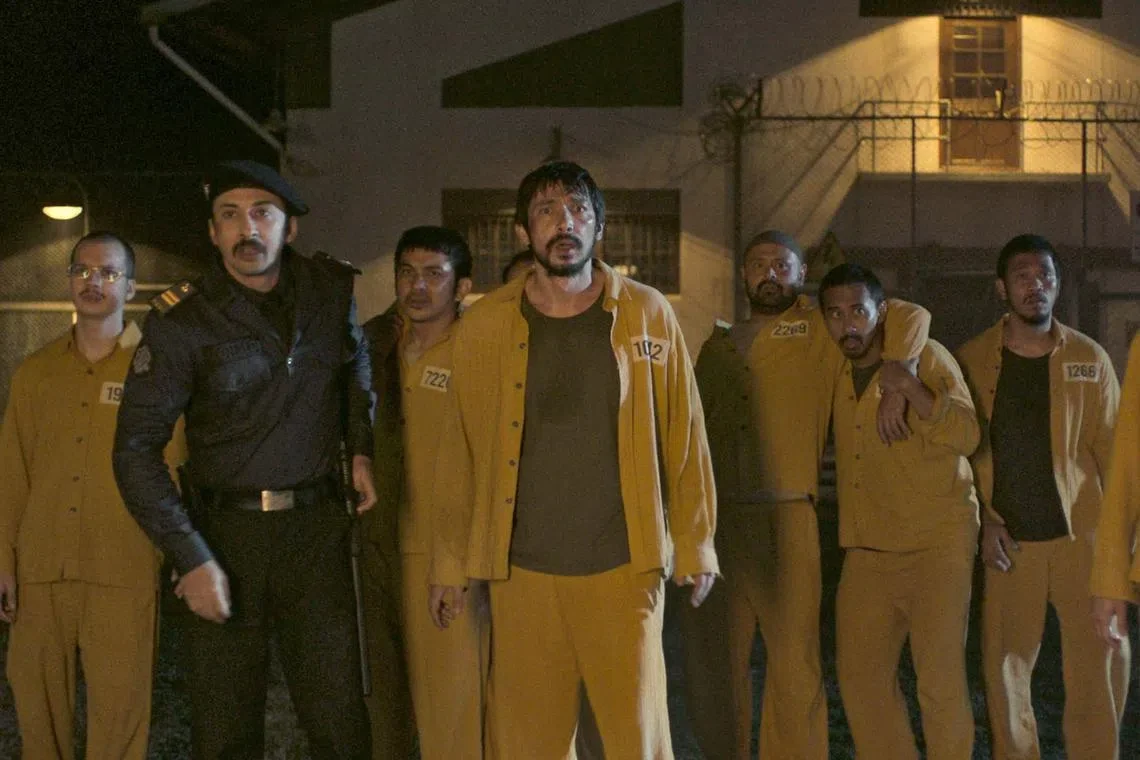
The Labuan Angsana prison is home to inmates across class lines and criminal charges. The microcosm has its own social norms balanced by the inmates’ ability to follow the rules and the guards’ practice of enforcing them. When new inmate Dimas (Endy Arfian) arrives, a rash of mysterious, gruesome deaths befalls the prison. Some prisoners believe it is a malevolent spirit, others a bloodthirsty inmate. Amidst the carnage, Dimas eventually meets Angorro (Abimana Aryasatya), a man who spends his days behind bars thanks to extended sentencing from sticking up for various prisoners against the abuse of the guards and other inmates. He, along with his posse, must work together to determine what is happening in the prison and how to stop it before they all succumb to the fury of the ghost or the contempt of the staff.
An uproarious horror comedy, Ghost in the Cell balances sick scares, sharp satire, and its novel setting with aplomb only Joko Anwar can deliver.

Its brutal and bloody cold open sets the scene perfectly for Ghost in the Cell. Both setting the stage for its greater mystery with tiny clues and serving as the first scare, Ghost in the Cell promises bombastic, almost playful like scares in this horror comedy. Dimas’s introduction to the prison serves as a perfect way to introduce the audience to its social dynamics. Encouraged by his newfound guide and eventual buddy to keep his head down, Dimas shrinks away at his new life. It’s a harsh reality of prison but not everyone is built for that kind of life, and Ghost in the Cell makes this clear.
It’s in the second death, and the ones that follow, that Ghost in the Cell truly shows its teeth. Making art out of its victims, the spirit makes statements with its rage borne from the circumstances of its death. Twisting bones, shaping flesh, and twisting screams on its helpless victim’s faces, the ghost matches the aura of its victims, as pointed out by Six (Yoga Pratama), a man who can see hazy, colored vapors hovering around the inmates, which correlates to their unhappiness, and thus their vulnerability to the spirit. As the group presses on and the prison population dwindles, they discover that the answer to their woes is closer than they imagined. Labuan Angsana was always the spirit’s destination, as the key to solving the mystery hides behind the corruption of the system that protects those that cause the most harm.
While the mystery behind the spirit drives the story, it’s the inmate’s characterization that becomes the film’s greatest strength. Affording nuance to its wide swath of inmates, Ghost in the Cell lets levity, lightness, and even love into the equation with how they treat each other and see the world. Sure, there are some troubling depictions that recall stereotypes and inflame homophobia, but there’s a profound willingness to extend grace to people who are clearly down-on-their-luck. None get this treatment more than Dimas, wrongfully convicted, and Angorro, the directionless wanderer.

Ghost in the Cell characterizes Dimas as a caring, dedicated, and submissive man. Taking the fall for a spiritual evil that latched onto him, Dimas survives night after night thanks to his guardian angel from Hell. His frustration with his sentencing and fear of doing anything to ignite another inmate’s wrath leads Dimas to paralysis. Dimas’s cowardice is often depicted as humorous but also understandable, given his circumstances. Angorro, however, is given a more complex journey. His desire to do the right thing feels more like a reason to punish himself for ending up in prison in the first place. Feeling guilt for leaving his children without a present father, his decision to put others before him inevitably serves as a way to prevent his reintegration into society. What would drive someone to choose prison over freedom, especially someone with mostly straight morals? Ghost in the Cell seeks to answer this through Angorro’s journey.
The horror and the humor of Ghost in the Cell plays out through its playful approach to mayhem. Its bright, sunshine-y lighting and dynamic camerawork bring out the fast-paced, blood-soaked tone of the film brilliantly. Scenes of prisoners dancing and praying to bring down their aura and long pans of inmates showering (featuring its hottest actors from behind, thank you for balancing the homophobia with this, Joko Anwar!) reek of ridiculousness but work because of the earnestness of the performers. Take Aming Sugandhi’s performance as Tokek; he absolutely transforms into the vilest inmate and it’s delightful to watch because of how far he swings in every scene. While the daylight setting does take a bit away from the scares, it allows Anwar to depict some truly provocative and dazzling visuals, especially from its iconic ghost design that will send shivers down any trypophobe’s spines.
Far from perfect, Anwar’s supernatural slasher comedy works because of the uniqueness of its vision. Strong emphasis on character and cinematography allow Ghost in the Cell to forge its own identity while still serving plenty of thrills and laughs for those seeking simplicity in their horror comedies. The daylight setting and comical approach to horror does dampen the scares but serves a greater purpose of satirizing the types of corruption that run rampant in any country. Report for processing at the nearest theater because Ghost in the Cell is a can’t miss Indonesian horror film for any genre aficionado.
Overall Score? 7/10