Leviticus (SXSW) is Searing, Soaring Supernatural Queer Horror with Bold, Incisive Commentary
Title: Leviticus
First Non-Festival Release: June 19, 2026 (Theatrical Release)
Director: Adrian Chiarella
Writer: Adrian Chiarella
Runtime: 88 Minutes
Starring: Joe Bird, Stacy Clausen, Mia Wasikowska, Nicholas Hope
Where to Watch: Check out where to find it here
This film’s review was written after its screening at the South by Southwest Film Festival in 2026.
Conversion therapy is an insidious response to queerness but one known all too well to a sizable percentage of LGBTQ people. The goal of most conversion therapy programs is to completely eradicate any feelings or thoughts that deviate from traditional cisgender and heterosexual presentations. It’s also entirely ineffective leading, more often than not, to depression, anxiety, self-harm, and suicidal ideation. Typically religious in origin, the practice of conversion therapy is rightly condemned by most credible professional organizations in science and metal health. Some ignorant people persist with the practice anyway. Leviticus seeks to challenge this mindset.
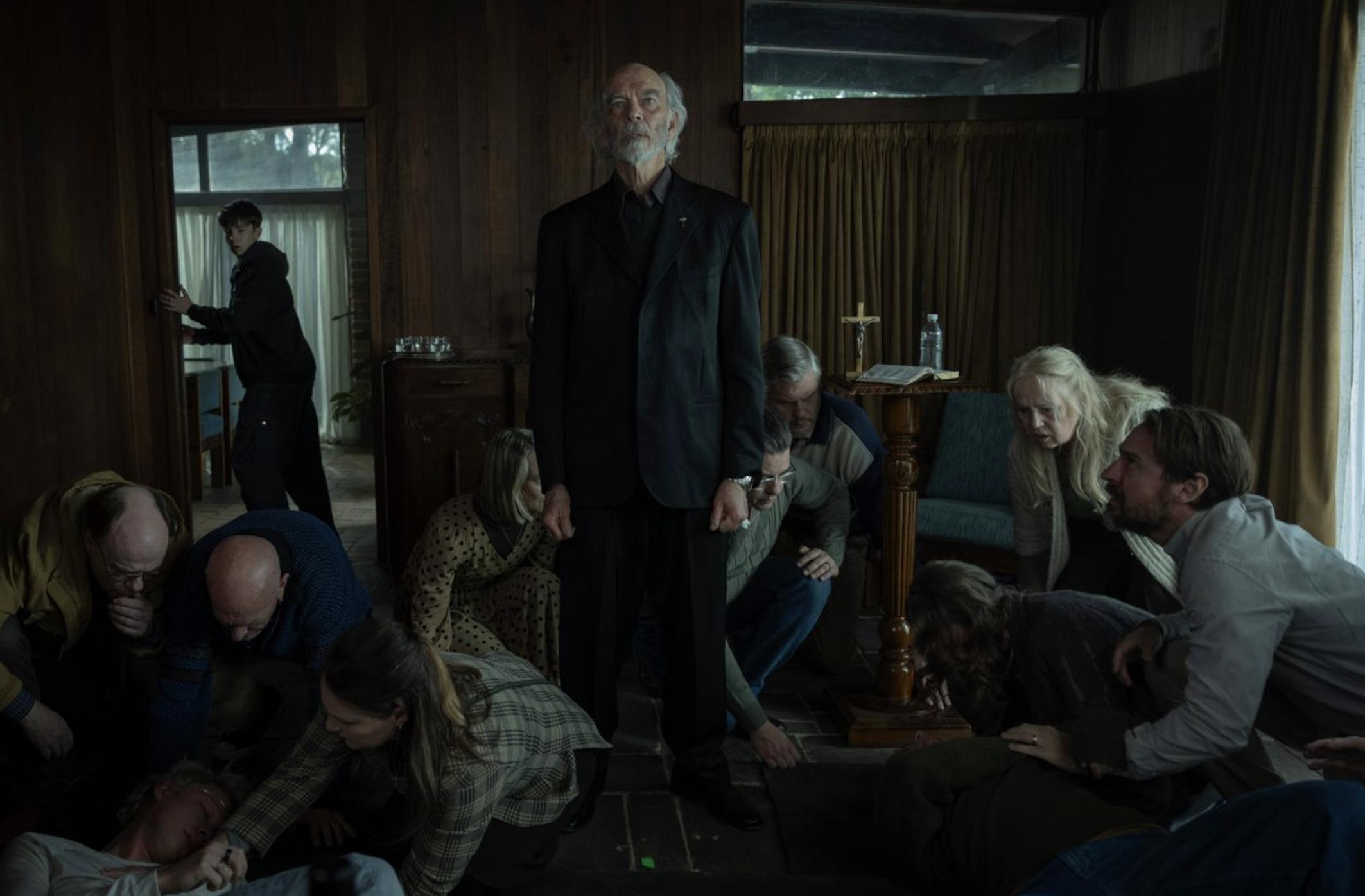
Young and closeted teenager Naim (Joe Bird) wanders through life listlessly after he and his mother (Mia Wasikowska) lost his father. Life in his new town is boring and painful except for Ryan (Stacy Clausen), who Naim has a passionate, secretive love for. When Ryan fools around with another neighborhood kid, the Pastor’s son (Jeremy Blewitt), he informs the Pastor (Ewen Leslie) who hires a deliverance preacher (Nicholas Hope) to carry out a powerful conversion therapy ceremony. Once carried out, anyone victimized by it is subject to deadly pursuit by the doppelgänger of the person they love most. For Naim, once he undergoes this same procedure, and Ryan, that’s each other.
A harrowing exploration of how embracing queer shame can literally kill you, Leviticus crafts smart, pulsing supernatural horror.

By necessity, Naim’s story operates as a coming out story hinging on how terrible it can be portrayed in its devastating mundanity. Naim’s mother’s choices to carry out the abuse is portrayed as appropriately horrific despite Naim not being brutalized during the initial affair. It’s the aftereffects where he needs her most that she’s gone. This depiction is amazing because it doesn’t go for the most over-the-top reaction to spell out the horror of the situation. Naim’s mother lets him down far greater as someone who claims to love her son but refuses to be there for him in the wake of his father’s death or in his fears navigating coming into himself. Her absence is the neglect and source of the rot she’s so desperate to excise.
In the end, Leviticus demonstrates that the worst abuses hurled aren’t from those that hate queer people. It’s the ones that claim they care, when they don’t. Naim’s mother’s legacy will always be torturing her son during his greatest time of need.
The looming specters of religion and shame haunt the narrative threatening to claw their way through the screen. Leviticus becomes another film in the long line of horrors to anthropomorphize its antagonist in service of its greater extended metaphor. It lands perfectly. By villainizing shame, Leviticus appropriately depicts the horrors of embracing your true self, or rather, the failure to do so. A terrifying idea in of itself, Leviticus takes every opportunity to put its characters through the wringer for their love. No matter what Ryan and Naim do, they can’t seem to stay away from each other. And why should they?
While much of Ryan and Naim’s relationship is forged in secrecy, it’s their steadfast refusal to abandon each other in their darkest times that characterizes their love, and queer love in general. While it would be easier for them to just remain alone for the rest of their lives, Leviticus demonstrates the power of agency as an encouraging factor for endurance. Sure, the outlook is grim and they lack the tools needed to survive. They have to try anyway. We have to try anyway.
Leviticus posits that the only hope for queer people is authenticity and solidarity.
This authenticity emerges through both Joe Bird and Stacy Clausen’s performances. Each expresses their fear, joy, confusion, and anger differently but there’s plenty of overlap in between. Bird gets the more emotional, heavy hitting scenes as he’s the main character, but Clausen gets his moments too, especially when he’s battered and bleeding.
Rich, deep atmospheric horror blends with more traditional jump scares to craft something special. Leviticus isn’t coy about its danger. From the beginning, it uses lingering camerawork and longing stares to induce the sinking feeling that sets in at the beginning and never lets go. The horror is present long before the deliverance preacher arrives. It’s present in the secret rendezvous and tiptoeing around the place one calls home. Then, it erupts once the curse is placed, evoking the fear and evil that embodies the deeply harmful, discredited practice of conversion therapy. It does so in a flurry of vicious imagery and truly dizzying assaults on the senses.

Powerful, affecting, and scary as hell, Leviticus is queer horror excellence personified. Fans of supernatural horror and teen coming-of-age stories will find plenty to appreciate in this Aussie import. Deeply upsetting at times and covering understandably dark material, the triggering elements of Leviticus are overwhelmed by the power of seeing such a bold reclamation of love. Neon picked up another banger with Leviticus, and it’s about to take the world by storm in June.
Overall Score? 9/10