Mean Girls Meets The Craft in Witchy Gen Z Mall Hangout Horror Forbidden Fruits (SXSW)
Title: Forbidden Fruits
First Non-Festival Release: March 20, 2026 (Theatrical Release)
Director: Meredith Alloway
Writer: Lily Houghton, Meredith Alloway
Runtime: 103 Minutes
Starring: Lili Reinhart, Victoria Pedretti, Alexandra Shipp, Lola Tung
Where to Watch: Check out where to find it here
This film’s review was written after its screening at the South by Southwest Film Festival in 2026.
Some people invite curiosity into their lives solely because of the projection they show to the rest of the world. What looks perfect on the outside can reveal true ugliness on the inside. Friendships can often look like this, especially if they exist within the “it” group in a social setting.
The employees of Free Eden run the Dallas Mall, and everyone knows it. They’re beautiful, they’re fashionable, they’re coolness personified. Apple (Lili Reinhart), Cherry (Victoria Pedretti), and Fig (Alexandra Shipp) are a trio after their fourth left the group under explosive circumstances. Pumpkin (Lola Tung) wants to know more. She’s been watching them from afar, and with secrets of her own, seeks to join the group, unaware of their fascination with witchcraft.
A thoroughly entertaining, if a little deflated witchy teen horror film, Forbidden Fruits has enough jokes to sweeten its delightfully campy exploration of teenage girl groups.
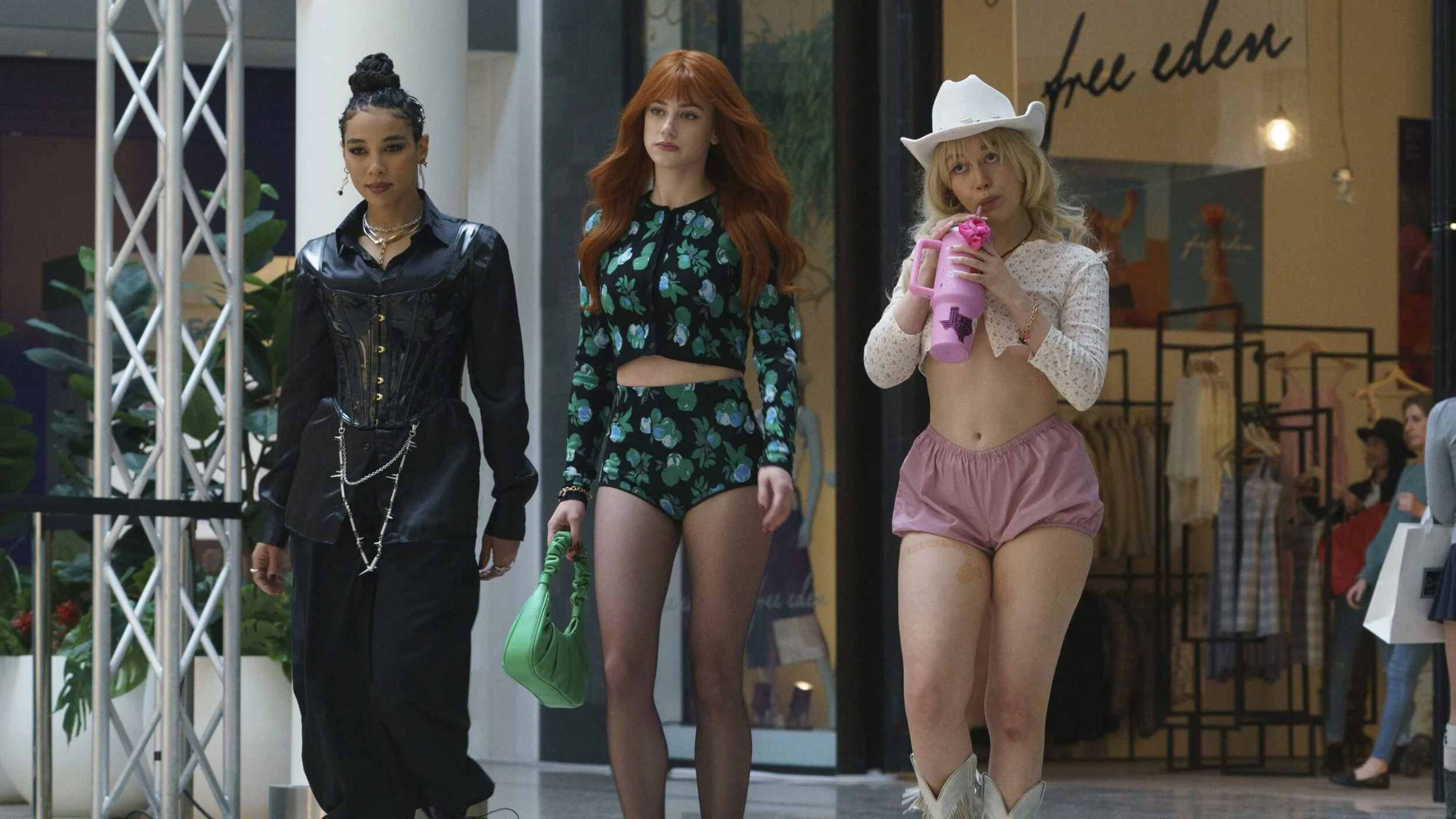
Critiquing the shallow, misinformed version of feminism that sneaks up in well-meaning spaces, Forbidden Fruits explores what fractures female friendships groups. From the ways in which Apple and company recruit for their coven to the techniques used to control dissent, there’s a distinct cult-like mentality that guides the group more than just “girls supporting girls.” There’s methodology to choosing someone attractive but not too threatening, cool but not overly flashy, and interesting without being nerdy that makes it so each woman fits a very narrow, pre-determined role in their femininity. Then, it’s used against them.
Forbidden Fruits stretches the conceit to show how apocalyptic it can feel when these friendships change or end. After so many seasons of codependency and subterfuge, the weight of their secrets and angst becomes too much. When Forbidden Fruits gets vicious, it protracts its claws in a flurry of vicious insults and takedowns that show just how deep the cracks lay.
Cloaked in buzzy Gen Z slang and vicious barbs, Forbidden Fruits uses its ridiculously kitschy dialogue to shine a brighter light on the ways manipulation and triangulation are used to control. Social isolation is a powerful motivator, and if someone declares that a person brings bad vibes, it can spell the end of a relationship. Forbidden Fruits shows what that mentality can do to individuals and overall group dynamics. Healthy friendships are characterized by reasonable disagreement, a commitment to being there in difficult times, and honesty, among other things. The coven in Forbidden Fruits has none of these things. Instead, aspirational qualities of ephemeral traits like beauty, shared distaste of others, and adherence to trends epitomizes their group. It isn’t about how much they enjoy their time with each other; it’s about the gains they can make socially that guide their actions.
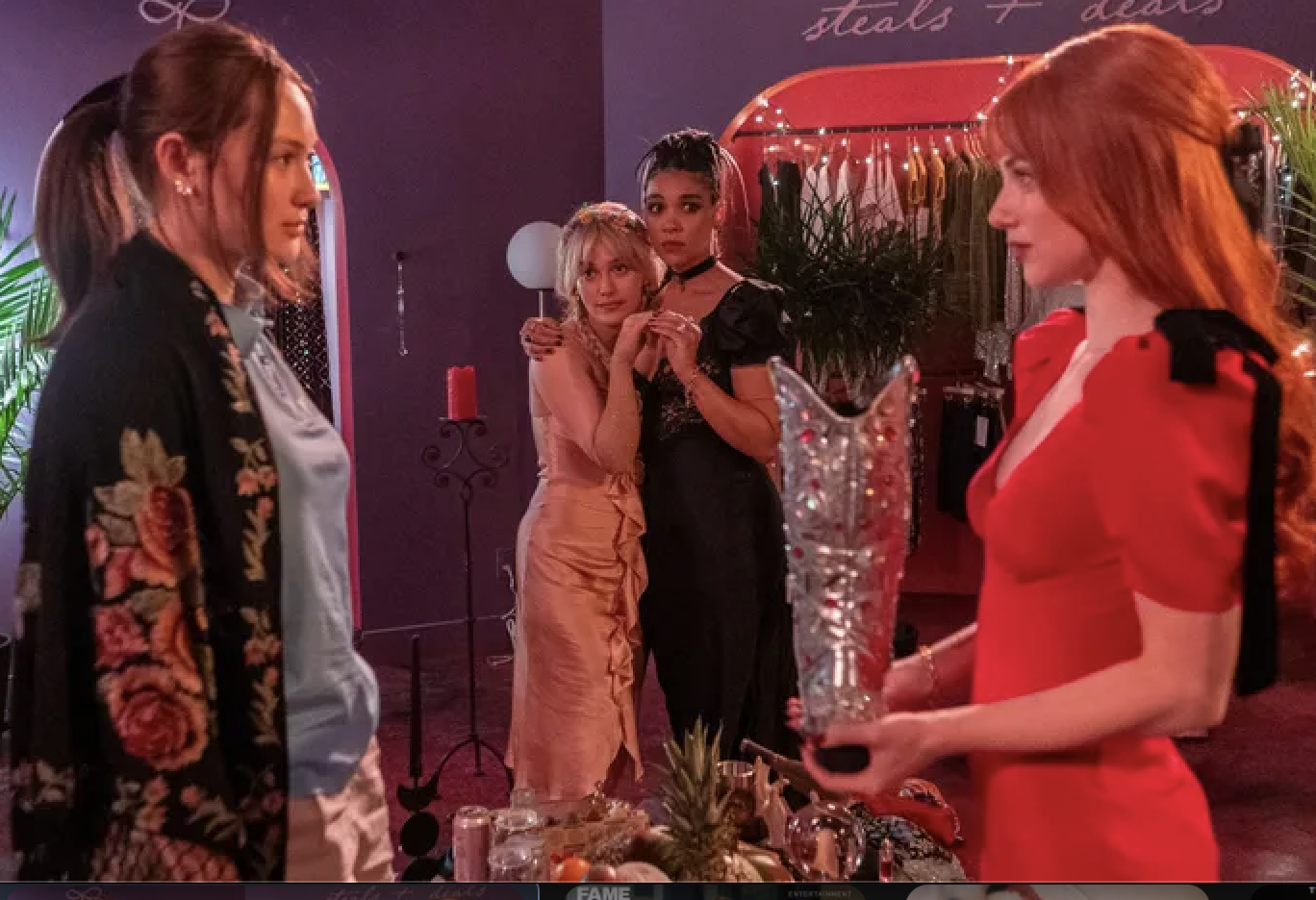
Forbidden Fruits doesn’t outright judge the women for this. Each actress gets a chance to share a rare moment of true vulnerability when their character thinks they’re alone. Free-flowing admissions of doubt, fear, and frustration better shape how and why they act the way they do but it’s more telling that nearly all of these moments are done in isolation. Operating more like unspoken, open secrets, their various “lapses” in judgement against the coven demonstrate what fake friendship looks like if true emotional intimacy is neglected.
Underneath the underhandedness and thin veneer of cool girl detachment is a beating heart of loneliness that only wants connection and sisterhood. Forbidden Fruits shows that this is the true thing to fear. Loneliness can inspire great darkness if not properly addressed.
While it covers plenty of great material, Forbidden Fruits never quite connects it together in the end. Getting lost in the various dynamics of its retail employees, the revelations are underwhelming and the weight of its magic feels flaccid. Its bright, corporate tinged cinematography and gaudy fashion choices makes the mall setting feel dated without actually evoking the imagery of the early 2000s that it so hopes to recreate. Aside from some well-executed gore, there isn’t much for the audience to sink their teeth into as it continuously circles back to woman-on-woman verbal takedowns.
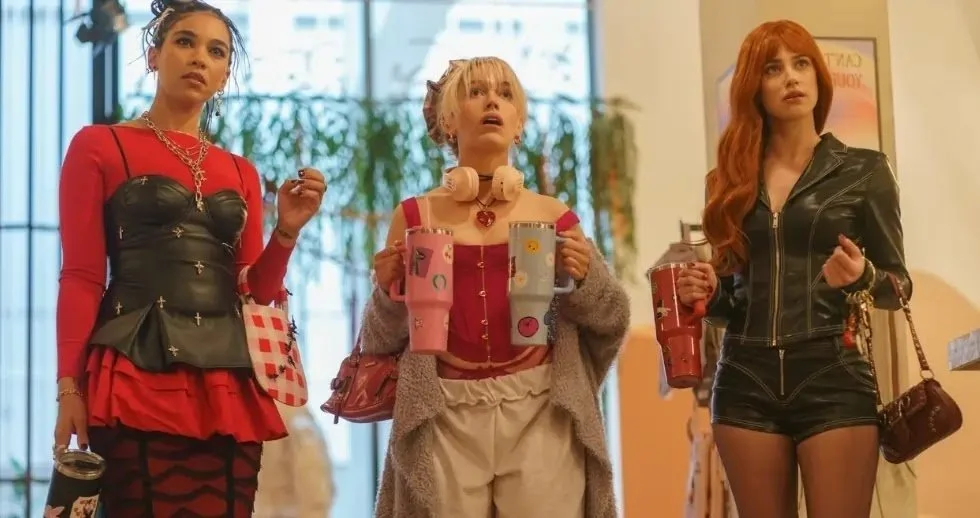
What saves Forbidden Fruits from getting lost in its camp and candy-coated runway show is its affable cast fully committing to their eccentric roles. Lola Tung and Alexandra Shipp take on the straighter roles, offering passion and a voice of reason through their turbulent group development. Victoria Pedretti gives the most memorable performance as the sweet-natured but hopelessly gullible Cherry selling her ridiculously tragic backstory with a mixture of pity and hilarity. None are as surprising, however, as Lili Reinhart. Reinhart sinks into the role of Apple without sinking her. Playing Apple with care, Reinhart never wavers from the truths that guide her, revealing some powerful and compelling ideas on the ways past relationships can inform the next ones.
It won’t be a sell for everyone, but Forbidden Fruits has enough juice to be worth the squeeze. Delicious insults, provocative commentary, and committed performances bring the witchy teen cult horror to life despite its underwhelming story. Shudder has a nice little gem on their hands, and anyone who loves The Craft and Mean Girls will find plenty to appreciate in Forbidden Fruits.
Overall Score? 6/10