Poorly Rendered Metaphors on Familial, Racial, and Elderly Trauma Stink Up The Front Room (2024)
Title: The Front Room
First Non-Festival Release: September 5, 2024 (Theatrical Release)
Director: Max Eggers, Sam Eggers
Writer: Susan Hill, Max Eggers, Sam Eggers
Runtime: 94 Minutes
Starring: Brandy Norwood, Andrew Burnap, Kathryn Hunter
Where to Watch: Check out where to find it here
As a social unit, family rarely forms perfectly, meaning there are many that exist with various cracks, strains, and whole fissures out there in the world. Society pushes for family members to forgive and forget slights, no matter how great, for the sake of unity. What if it gets to be too much?
This is the current dilemma for Norman (Andrew Burnap) when his father dies and his mother-in-law Solange (Kathryn Hunter) insists on moving in with him and his wife Belinda (Brandy Norwood). As a child, Solange tortured Norman, forcing her religious beliefs on him and over-disciplining him, leading to many issues later in life. Now that she’s returned to his life, she is adamant about restoring order in her house whether Norman and Belinda want it or not.
Undoubtedly original, The Front Room is an affront to cohesive storytelling, fumbling both well-meaning messaging and familial horrors.
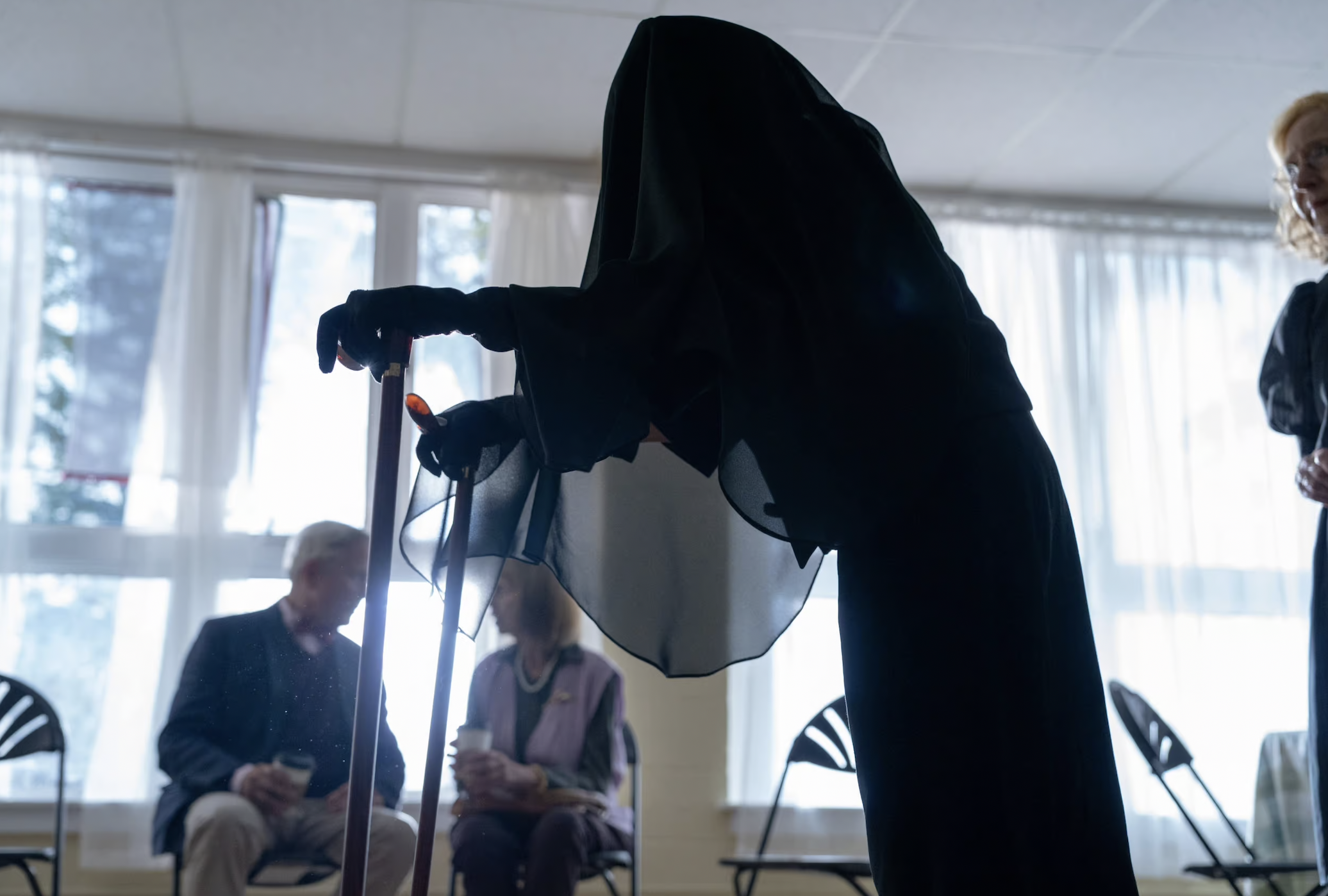
Not committing to any particular area of horror, The Front Room uses its uncomfortable situation to dive deeper into the ways childhood trauma can persist in adults. Norman’s regression into his younger self occurs quickly thanks to Solange’s rapid infiltration of their lives. It’s clear from his mannerisms that he is uncomfortable with this return to traumatic dynamics and is coping the best he can. Belinda does her best to support him but is at a loss to maintain her sanity while managing Solange’s social slights and mental and physical breakdowns. This drives a wedge between the couple as Norman shrinks inward and Belinda takes charge despite her exhaustion. The family dynamics within The Front Room feel under-developed, especially as Norman becomes increasingly detached from the narrative and it becomes Belinda versus Solange.
It’s possible to tastefully depict the horrors of aging but The Front Room is more concerned with exploiting these fears with cheap shots. Nearly every aspect of Solange’s existence is meant to evoke horror and pity, not for Solange, but for Norman and Belinda. Her inability to take care of herself is understandably met with an initial desire to care for her from Belinda. The sympathy dies quickly as soon as the couple fully realizes what it means to care for someone late in life. Solange is paraded around naked, covered in shit, screaming for far longer than anyone would anticipate. And that is the extent of the horror for most of the film, save for a few fake out moments scattered throughout the narrative.
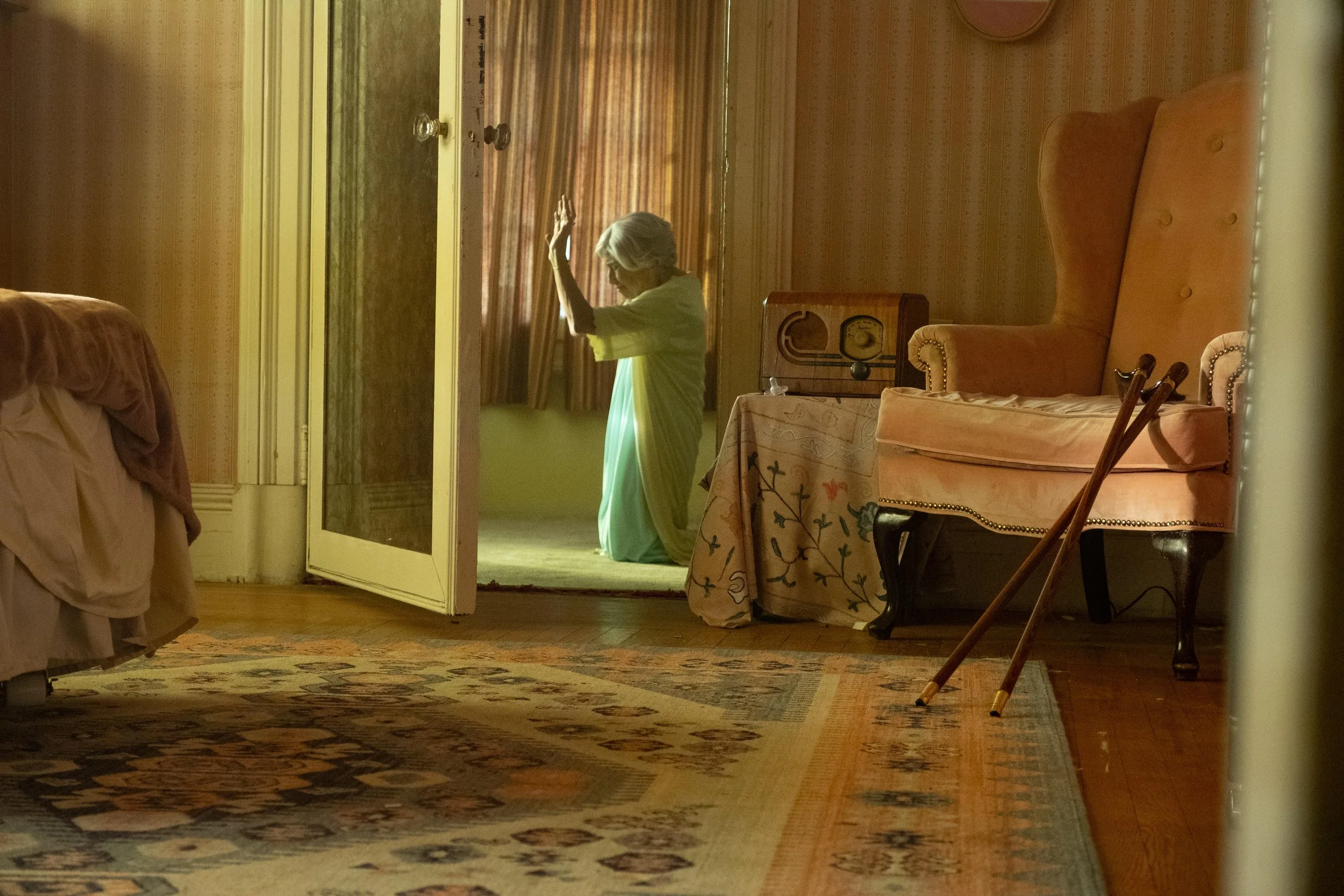
Along with its so-so attempts at aging commentary, The Front Room also adds important yet underbaked racial themes into its story as well. Solange’s racism, along with her abuse of Norman as a child, are presented as her major flaws. Between being a member of the Daughters of the Confederacy and dropping plenty of microaggressions directed at Belinda, it is easy for the audience to turn against her initial understandable needs. We then watch as Belinda takes on a role of caretaker to her mother-in-law while tending to her child. All household duties and emotional needs are managed by her, which feels eerily similar to the reality of an enslaved Black woman when slavery was in full swing. Unfortunately, this idea is interesting but is left unexplored in favor of other plot threads. Solange’s racism is used as a crutch for driving up tension rather than saying anything particularly profound on the subject making the entire ordeal feel hollow.
[SPOILER]
Perhaps the most egregious element of The Front Room is its lack of a satisfying ending. After enduring the literal shit of the first 85 minutes, discovering how The Front Room ends is insulting. The bait and switch of insinuating that some sort of supernatural presence or powers is haunting Norman and Belinda only for it to be an entirely psychological experience feels unearned. This is compounded with the final moments when we learn that their torture doesn’t end with Solange’s natural death but Belinda’s intervention. It all feels, messy, pun intended.
[/SPOILER]
Perhaps the one positive of The Front Room comes in Brandy Norwood and Kathryn Hunter’s performances. Norwood manages her psychological descent well enough, making the thin script feel bigger than actuality. Hunter gives her all to her performance making Solange as nasty and pathetic as possible while still making aspects of her character sympathetic enough as an old person meeting their slow, painful end.
Silly, slow, and devoid of much substance, The Front Room is a patchwork horror film that never finds its footing. Solid performances can’t take away from the bizarre story that seems more interested in making caricatures of the elderly while minimizing the actually interesting elements of the film – the exploration of abuse and racism. Solange says it best with The Front Room. It’s a mess! It’s a mess! It’s a mess!
Overall Score? 4/10