Title: The Blood Countess
First Non-Festival Release: TBD
Director: Ulrike Ottinger
Writer: Ulrike Ottinger, Elfriede Jelinek
Runtime: 118 Minutes
Starring: Isabelle Huppert, Thomas Schubert, Birgit Minichmayr
Where to Watch: Check out where to find it here
This film’s review was written after its screening at the Fantastic Film Festival in 2026.
The storied legacy of Countess Elizabeth Báthory has haunted history books since the 1600s. The infamous Hungarian noblewoman is said to have tortured and murdered hundreds of girls with help from her servants. Convicted of murder and imprisoned inside her castle until death, her story lives on, for better or for worse, in horror media.
One such work is the upcoming fantasy horror comedy The Blood Countess, which reimagines Báthory (Isabelle Huppert) as a vampire who has awakened from years of undisturbed slumber. Parading around the streets of Vienna as if no time passed, Báthory reunites with her faithful servant, Hermine (Birgit Minichmayr) to retrieve a book that endangers vampires. Her nephew, Rudi Budi von Strudel (Thomas Schubert), complicates her efforts, as his ambivalence towards his affliction causes him so much distress he seeks out a therapist. With the police and angry townspeople on her trail, Báthory must evade capture and destroy the book if she wants to steal off into the night once more.
An underwhelming fantasy horror comedy, The Blood Countess frustrates with its lame humor and lacking story.
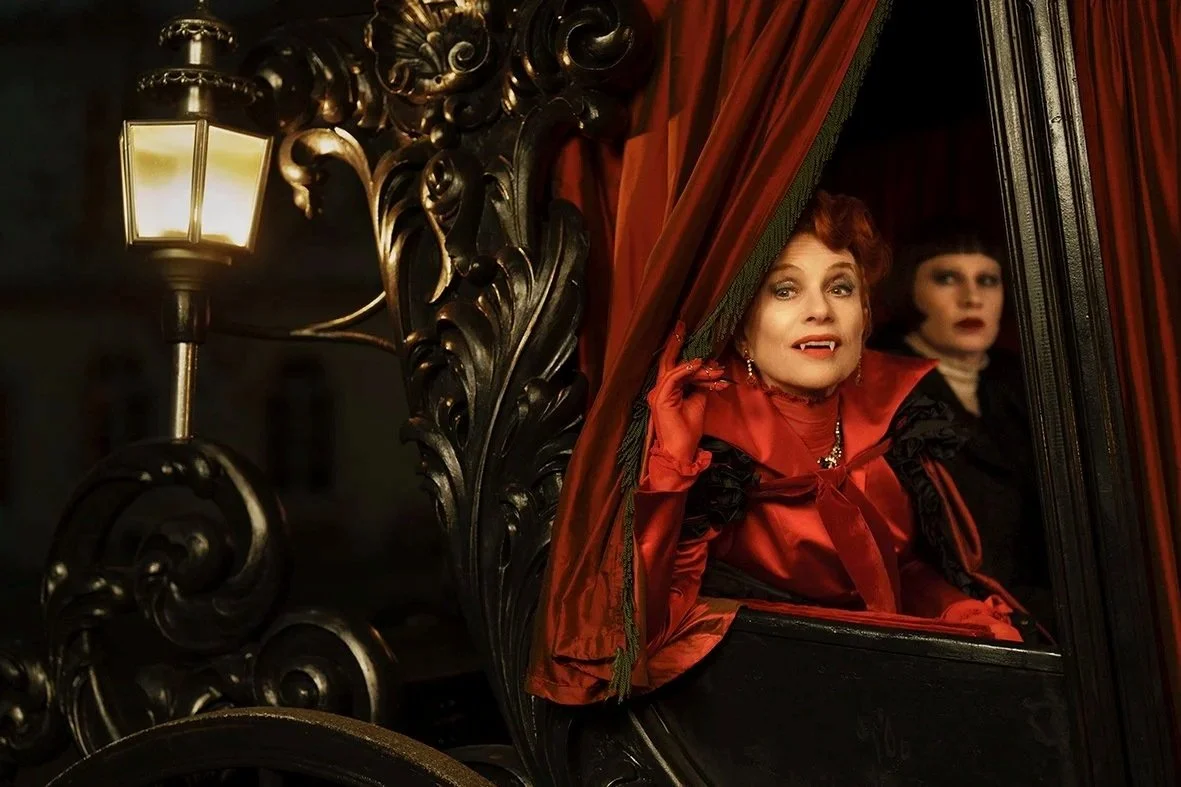
Kicking off with a steady, slow shot of a magnificent wooden vessel navigating the placid water of a cave, The Blood Countess makes a flashy first impression that says plenty about the film. With its focus on lampooning the upper class, the glamor of high society is juxtaposed against a messier representation of vampirism. The set design and costumes reflect this beautifully. Contributing to the film’s visual style, the attention to detail gives credence to the existence of this elite cabal of vampires, even if their characterization is underbaked. These problems persist, leading to The Blood Countess feeling less like a film and more like an excuse to show Isabella Huppert draped in gorgeous gowns while delivering campy dialogue.
While its social commentary is certainly welcome, it’s the lack of curiosity that makes The Blood Countess so aggressively fine. Class is tied to vampirism through metaphor. Reckless with people’s lives, obsessed with trivialities, and unconcerned with the plight of those around them, the depiction of vampires in The Blood Countess mock the rich. Unfortunately, the metaphor feels stale here. The comically evil depictions of the ultra-wealthy don’t have much weight to them, as much of The Blood Countess follows Báthory’s quirky adventure to retain her immortality. Killing anyone who gets in her way by navigating the social situations via her wealth and charm, Báthory gets treated more like an idea than a character. Bumbling detectives, sycophantic maids, and fellow fanged socialites appear interesting on the surface but offer little in the way of characterization while simply serving the greater metaphor of the film.
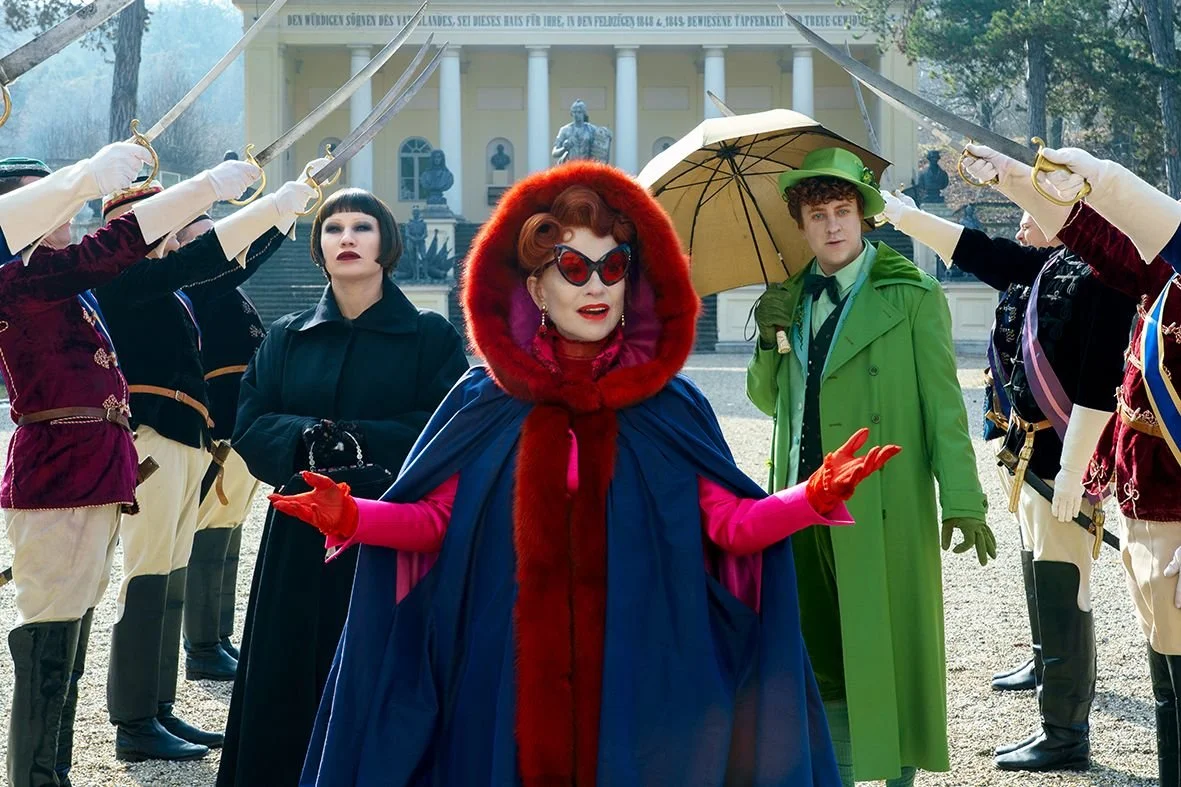
None are as thin as Báthory. While Huppert gives a great performance as the Countess, there isn’t much for her to play with in this iteration of the historical figure. Báthory’s history, both in real life and in The Blood Countess, is ripe with material to make plenty of statements alongside a good story. Her singular focus on eternal youth informs every decision she makes but there’s an emptiness attached to her that makes it hard to care about her quest. Lacking dimension or memorability, Báthory colors well within the lines of what is expected from this kind of take on the Countess’s proclivity for violence. It’s empty but not without the cursory underbaked, anti-rich messaging.
Playing out more like a quirky adventure than anything else, the dry and direct sense of humor gets old quickly. Its slow pace makes the film drag. Stuffed to the brim with fluff under the guise of maximalism and humor, The Blood Countess is a terribly boring take on vampirism. It fits well with the matter-of-fact approach to horror despite never creeping anywhere near scary. It’s a very visual film, cramming as many gags as it can to distract from the fact very little happens in the story. Traveling from one European locale to the next, The Blood Countess struggles to develop a comedic identity. Sure, the visual appeal is there but it lacks the substance that would give it the kick one would hope from a lighter and queerer take on the monster and the woman.
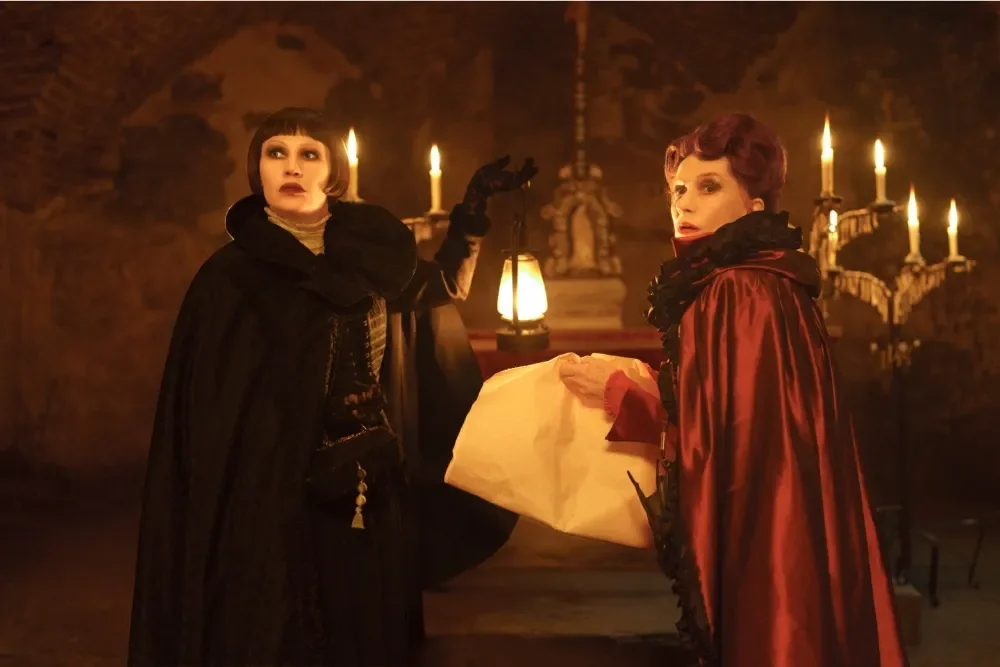
Horror fans that find themselves on its wavelength can find plenty to embrace in The Blood Countess. A strong leading performance and extravagant visuals balance out the tired approach it takes to vampires and Báthory herself. Flat characters, grating humor, and meandering storytelling kneecaps this German vampire horror comedy from hitting harder.
Overall Score? 5/10