The Cycles of Abuse Inflicted by Men are Illuminated in Brilliant Cult Horror Blood Shine (SOHOME)
Title: Blood Shine
First Non-Festival Release: TBD
Director: Emily Bennett, Justin Brooks
Writer: Emily Bennett, Justin Brooks
Runtime: 100 Minutes
Starring: Emily Bennett, Brendan Sexton III, David Call
Where to Watch: Check out where to find it here
This film’s review was written after its screening at the Sohome Film Festival in 2025.
“The past can be so cruel, they can keep you running deeper into the dark, but it doesn’t have to. The past only hurts if you let the darkness get to you. Don’t let it.” Blood Shine hides its darkness through sweet affirmations and cathartic violence. The most sinister destruction doesn’t stop at being done to someone; it arrives when one becomes willing in their own demise egged on by others.
Clara (Emily Bennett) is a disciple of a mysterious religion that worships light, in an effort to evade the destruction the dark promises. Choosing to live alone deep in the woods, she finds herself in the crosshairs of some very strange, lost men. One such man is up-and-coming filmmaker Brighton West (Brendan Sexton III), away upstate seeking inspiration for his next hit. When he stumbles across her path, Brighton is unaware of just how painful the price of his sins can be. But he’ll see perfectly clearly once Clara is through with him.
Shining, simmering religious horror transcends typical genre tropes in bold indie Blood Shine.
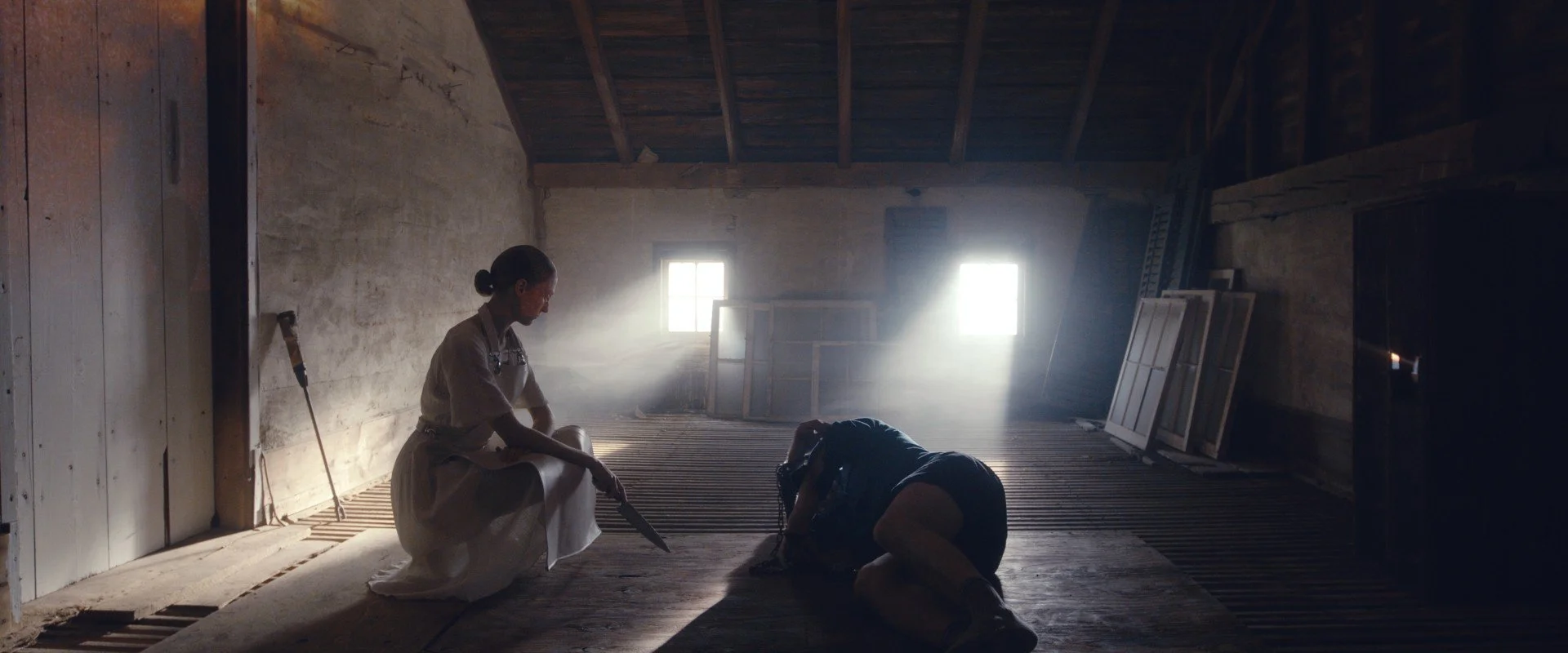
A mostly single-location horror drama, Blood Shine is brightest when it leaves the viewer to stew. Shackled to Clara’s spartan garage and forced to participate in her sickening blood rituals, Brighton West finds himself trying to escape by any means necessary. Time passes quickly for us and slowly for Brighton, his attempts to charm or escape going nowhere. There’s a real hopeless energy attached to the film that permeates far more than Brighton’s prison, soaked in dread at the implications behind Clara’s religiosity and his impending fate.
It’s impossible to ignore how Blood Shine is just as much wrapped up in themes of religious psychosis as it is in its feminist/revenge driven horror. The bulk of the more surface level commentary is gleaned through the gender dynamics between the two. Brighton leads with his charm and ingenuity to address the situation, performing the right amount of regret before finally realizing the points Clara makes. Opposite, Clara leads more with her strength, relying on her power when Brighton is defenseless. A nice subversion of tactics, Blood Shine illuminates the ways in which Brighton, and other men, abuse women for their benefit and are shocked at the repercussions of their actions. Unapologetic in its depiction of Brighton’s journey to accepting his nature, Blood Shine offers a unique and compelling answer for men grappling with shame related to their own choices and actions.
Using its explosive form of folk horror to highlight the parallels between different kinds of abuse, Blood Shine strips away the facades of its main characters to the meat of their selves. Clara and Brighton are such dense, interesting characters that complement its stark commentary on the cycles of abuse and men’s casual dehumanization of women. Brighton is obviously a stand-in for every man that refuses to see the humanity in others until his own absence is reflected back to him in the dark. Clara is the inevitable conclusion of a society obsessed with harming women through religion. Groomed because of her past abuses with men, Clara is seduced into the cult with promises of safety, love, and light. All she needs to do is one thing for them and that’ll be it. That’s how the cycle always starts. The tragedy compounds with a bittersweet ending for both, a testament to the ways religion can ruin people.
Emily Bennett and Brendan Sexton III handle the material adeptly. Bennett carries this detached yet intense energy that makes Clara equally terrifying and tragic. Waxing between impassioned monologues and emotionless lashings, Bennett captivates Brighton and audience members alike. Slinking into the smarmy filmmaker’s shoes, Brendan Sexton III manages to make Brighton both interesting and sad, in a way. His desperation feels genuine, even when his initial guilt is easily seen through. It’s a testament to Sexton’s performance that he is able to make such a slimy character so compelling, and almost able to root for?
Despite being a low budget film, Blood Shine is stunning, emphasizing the explosiveness of its character drama through its bold imagery. Almost like a visual bloodletting, the pain of Blood Shine must be felt in order to be real. To leap from the darkness and embrace the light. Full of bold and unsettling imagery, Blood Shine understands how important it is to maintain visceral ferocity to complement its heavier themes.

A horrifying tale of finding purpose and destroying yourself in the process to achieve it, Blood Shine is a shining light for how to twist familiar setups into something special. Its strong story, cutting dialogue, and even more brutal violence makes this indie folk horror as vicious in its horror as it is existential. Minor stumbles aside, it truly is impressive how much goes into Blood Shine. One thing’s for sure, after knocking it out of the park with their sophomore feature, Emily Bennett and Justin Brooks are just getting started.
Overall Score? 8/10