Title: Victorian Psycho
First Non-Festival Release: November 12, 2026 (Theatrical Release)
Director: Zachary Wigon
Writer: Virginia Feito
Runtime: 102 Minutes
Starring: Maika Monroe, Jason Isaacs, Thomasin McKenzie
Where to Watch: Check out where to find it here
This film’s review was written after its screening at the Fantastic Film Festival in 2026.
Adapted from the 2025 novel of the same name, Victorian Psycho follows Winifred Notty (Maika Monroe), a governess on her way to the illustrious Ensor House for a new job. Her role in the Pound family household is simple. She is to follow all of Mrs. Pounds (Ruth Wilson) instructions to the letter, teach Drusilla (Evie Templeton) and Andrew (Jacobi Jupe) all they need to know as respectable children, and never displease Mr. Pounds (Jason Isaacs). Winifred is up for the challenge. After all, she has finally rid herself of the terrible impulses that left so many of her former families bloodied and screaming. Or has she?
Bold, bombastic, and, most importantly, bloody, Victorian Psycho is a delightful psychological horror comedy.
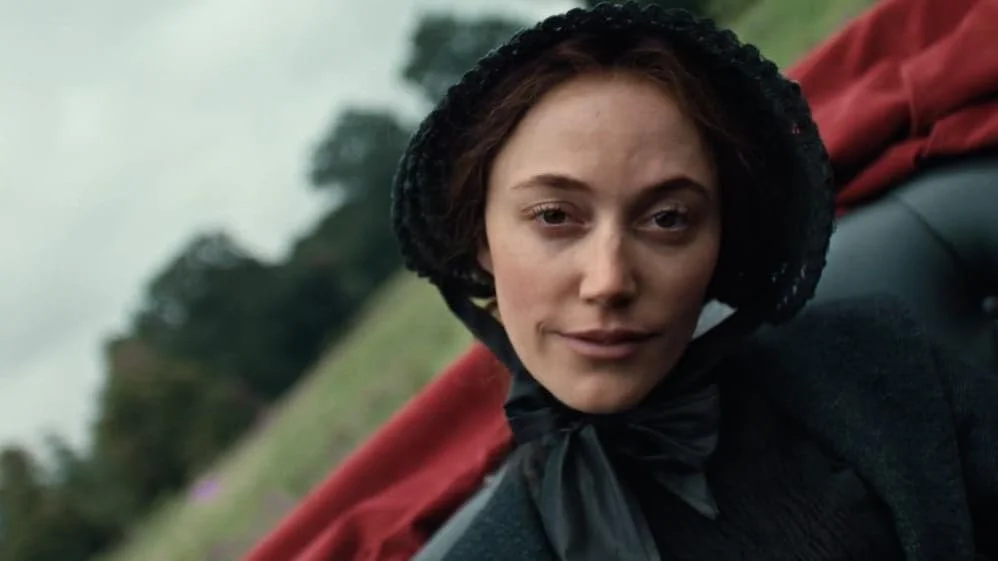
Wasting no time, Victorian Psycho introduces audiences to the bizarre realities of wealthy families at the time as well as its deliciously sinister protagonist. As Winifred familiarizes herself with the estate, she lays the foundation for her work. Relaying lessons of dignity and politeness, like killing a suffering animal, her attempts at civilizing her charges inspire more ire than appreciation. This type of humor courses through the bones of Victorian Psycho. It’s hard not to champion a film that has its bright eyed and unwell lead eat an entire raw ear to avoid detection.
The unhinged delivery only works because of Maika Monroe’s charming performance. Giving weight to Winifred that the text largely ignores, Monroe breathes life into a character that would otherwise be characterized as one-note. Instead, her bright, slightly unsettling facial expressions tell a story with every reprimand and slight. Winifred isn’t easily scared, but her cracks show a desperation that betray her precarious position in life. Racing against murmurs of memories she’d prefer stay buried in the past and the pressure each member of the household puts her under, Monroe’s Winifred demonstrates a full range of emotions underneath her pained grinning.
It’s in this pressure that Victorian Psycho digs its claws deeper into its commentary on class determinism and the ways social mores further shapes this. Convincing the powerful that their privileges are borne from luck and not ordained took time, smart rhetoric, and, of course, violence. Winifred is always reminded of this divide. Resigned to the cramped, stuffy governess quarters, her work scrutinized by the Pounds and staff members alike, and blackmailed by someone with dirt on her, Winifred’s circumstances are less than ideal. Still, she occupies a unique niche that allows her to influence the house through her own intentional manipulation. Walking the line each time to get what she wants, Winifred’s tactics act as a parallel to the real-life scrappiness required from the have-nots to maintain their status in life.
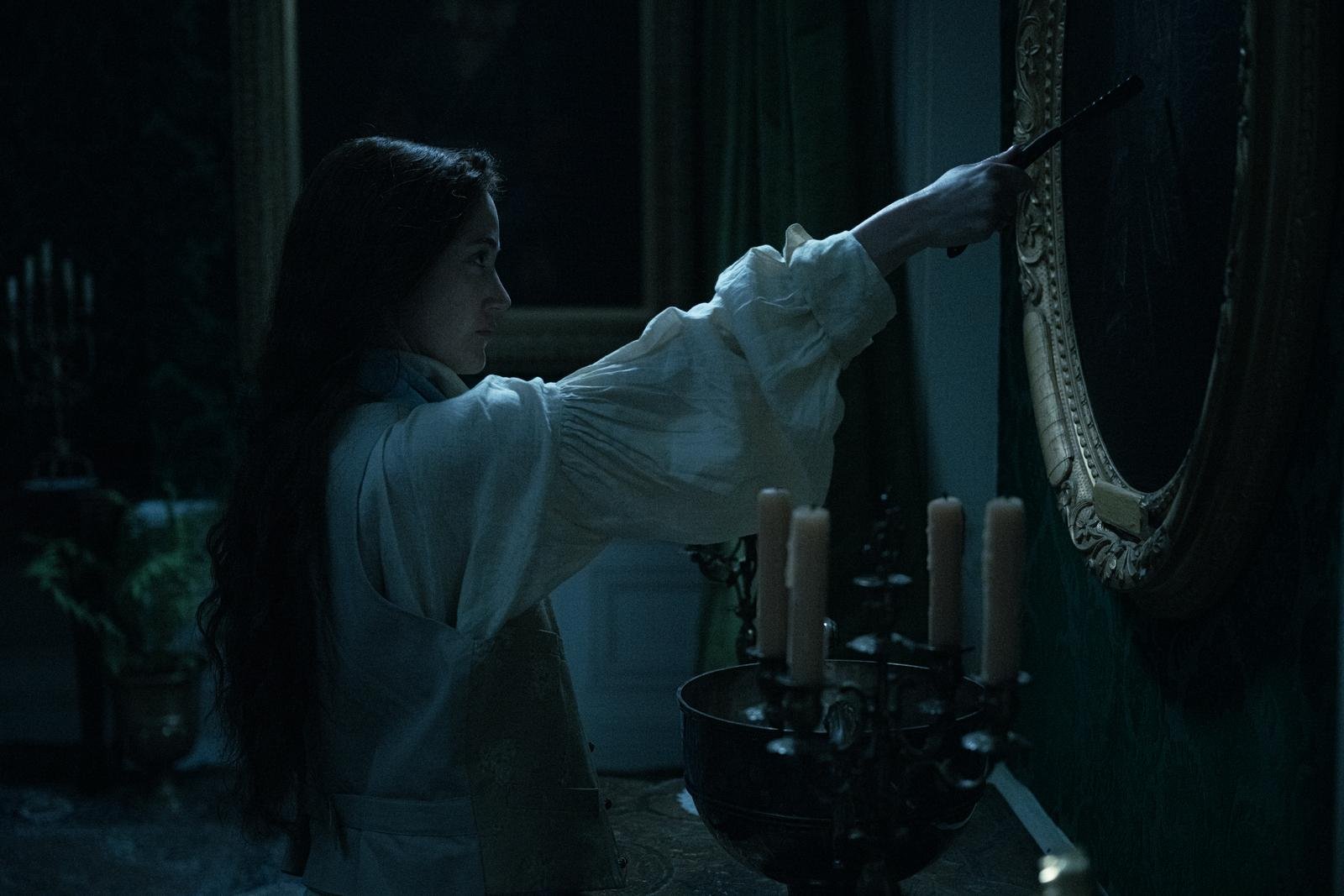
Since class determines so much in this period, the rigidity of social order ensures this one-sided balance is maintained. When knowledge of how to behave in polite society is reserved only for wealthy children, and the few who must instruct them, the lines that divide class push further. It’s no mistake that Winifred’s tragic upbringing puts her at an advantage to influence. She can more deftly navigate the social politics of the manor in ways an ordinary maid or groundskeeper cannot. It’s one of the many reasons why social movements require some degree of planning and understanding of diplomacy to accomplish anything. In this case, Winifred’s cause is to have her ghastly indulgences remain undetected along with some other hidden intentions.
While the character of Winifred furthers the film’s themes, her arc gets more unfocused the closer she gets to being discovered. It’s clear that whatever is wrong with Winifred makes her a danger to others but the logic behind her ailment is unfocused. Outside of keeping her secret at all costs, her triggers are hard to predict. It may make her a more unpredictable character, but it takes away from the specificity of the film’s message. The inconsistency in her character makes it hard to fully get behind the swings. This gives each dramatic reveal in Victorian Psycho less weight than the previous. Her relationships to each character fall flat too. Without much foundation afforded to the threads Winifred shares with each family member, and the naive Nurse Lamb (Thomasin McKenzie), the subsequent betrayals and confrontations hit softer.
This doesn’t stop Victorian Psycho from delivering on its premise. Approaching its period setting with a firm understanding of camp, Victorian Psycho juxtaposes slick, modern filmmaking sensibilities with its gothic setting. Energetic camerawork captures an intensity to the violence and results in a largely foreign experience for the sub-genre. Great lighting and set design bring the exorbitant manor to life while never straying from the atmospheric necessities one expects from a horror film.
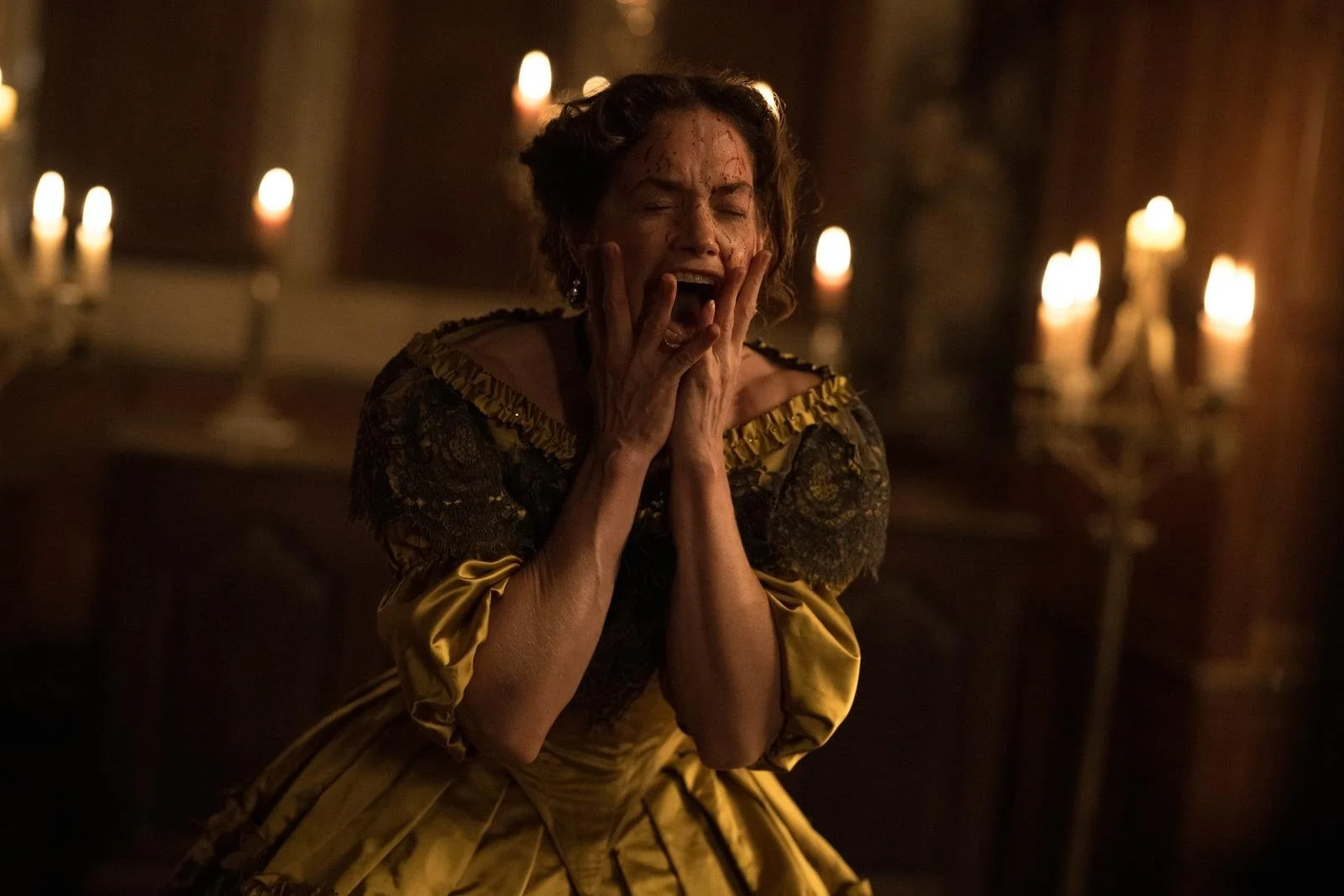
Well-paced, gory, and deeply funny, Victorian Psycho is an easy recommendation for any horror fan. Featuring a great cast, and specifically a bold performance for Monroe, the story of Victorian Psycho glides to its bloody climax with the kind of heart and humor one expects from a horror comedy. For anyone hoping to exorcise their own unhappy thoughts of the wealthy, Victorian Psycho delivers.
Overall Score? 7/10