Found Footage Meets Police Thriller in Generic Supernatural Horror Bodycam (2026)
Title: Bodycam
First Non-Festival Release: March 12, 2026 (Digital/Streaming Platforms)
Director: Brandon Christensen
Writer: Brandon Christensen, Ryan Christensen
Runtime: 75 Minutes
Starring: Jaime M. Callica, Sean Rogerson, Catherine Lough Haggquist
Where to Watch: Check out where to find it here
Police brutality and corruption are hot topics thanks to ongoing conversations of racial reckoning – even if they haven’t produced the necessary results yet. Allegations of misconduct span states, but the disdain officers feel for the very communities they are meant to protect leaves a stain on the profession. If you demand respect from people you mistreat, how can you expect them to help when you end up in hot water?
Late one evening, Officers Jackson (Jaime M. Callica) and Bryce (Sean Rogerson) respond to a call in one of their city’s rougher neighborhoods. The occupants of the dilapidated house are silent and mysterious, offering little in the way of cooperation and peace of mind as the officers press onward within their home. A fatal mistake becomes the catalyst for the police officer’s night of horror. Now the two are on the run from a powerful force that controls the neighborhood, threatening their lives and the lives of everyone they care for.
Stretching its thin premise to its limits, Bodycam is limp found footage horror wrapped in glossier indie production values.
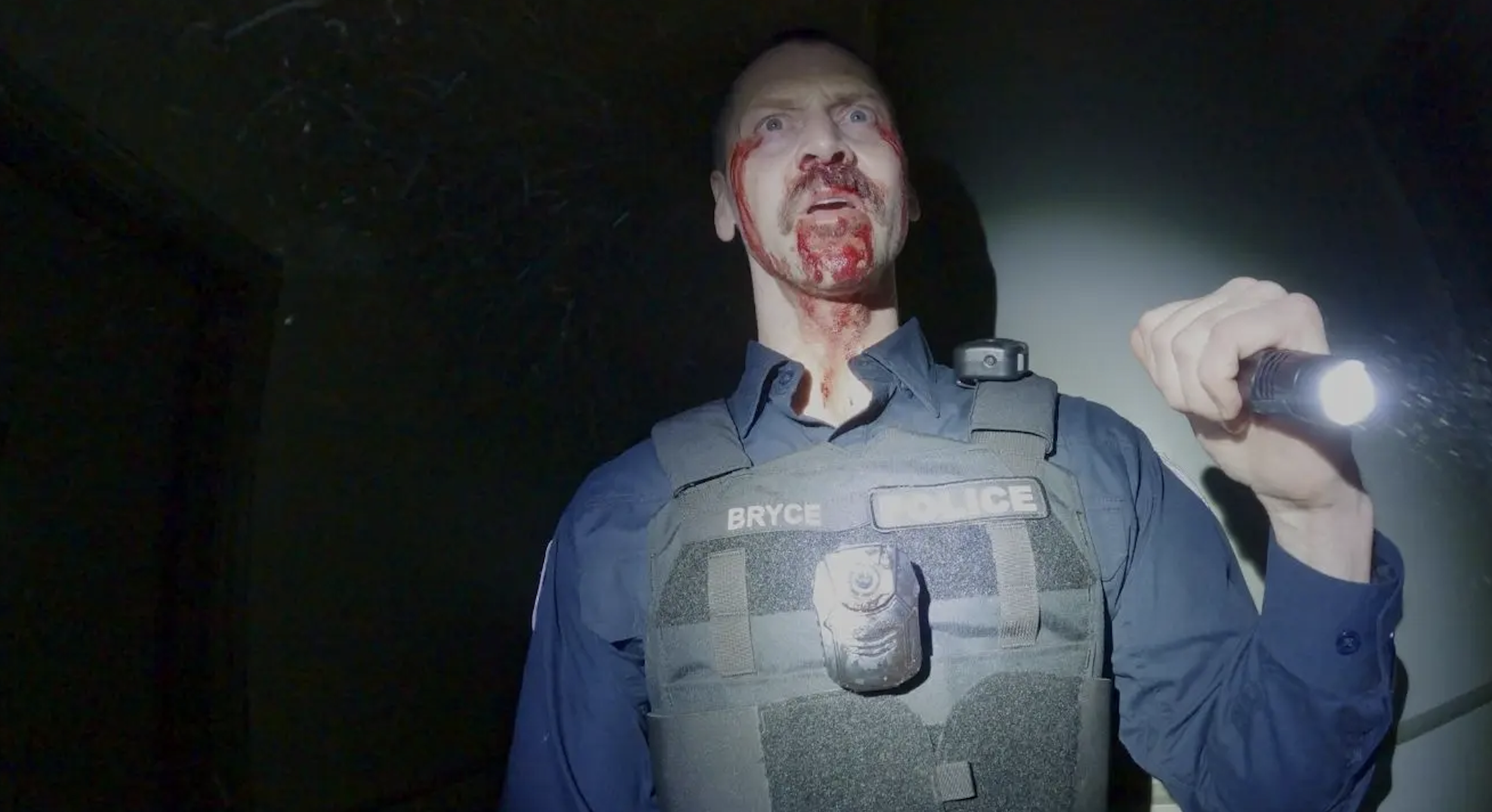
The chaos of Officer Jackson and Bryce’s night burns slowly with their initial investigation. Buoyed by the adrenaline of the job and belief in their unquestionable power, the duo blast through obstacle after obstacle as their night deteriorates. Uncooperative witnesses become the least of their problems when the first tragedy happens. From there, Bodycam doesn’t quite know how to develop its story further.
The poor decision-making from the officers becomes the driving force of their own demise, even before the supernatural entity that has been puppeteering the events of the night makes itself known. The officers are given plenty of chances to right their wrongs, but their insistence at pressing on becomes their undoing.
Officer Jackson is characterized as the more empathetic of the two, but he still goes along with Officer Bryce’s plans, which are borne entirely out of self-interest. Their journey would be interesting but when contrasted with the way the community members are portrayed, it feels off. Depicted almost like a hive mind with little autonomy, they mostly stand around staring listlessly, or with a smirk, while the officers bark orders. With the way the story goes, the choice gets stranger. Community members refusing to help the officers out of their self-fulfilled annihilation is portrayed as sneaky or outlandish, despite the fact of Bodycam’s inciting incident. In the end, the commentary behind Bodycam closes in on itself, failing to excite with any real point.
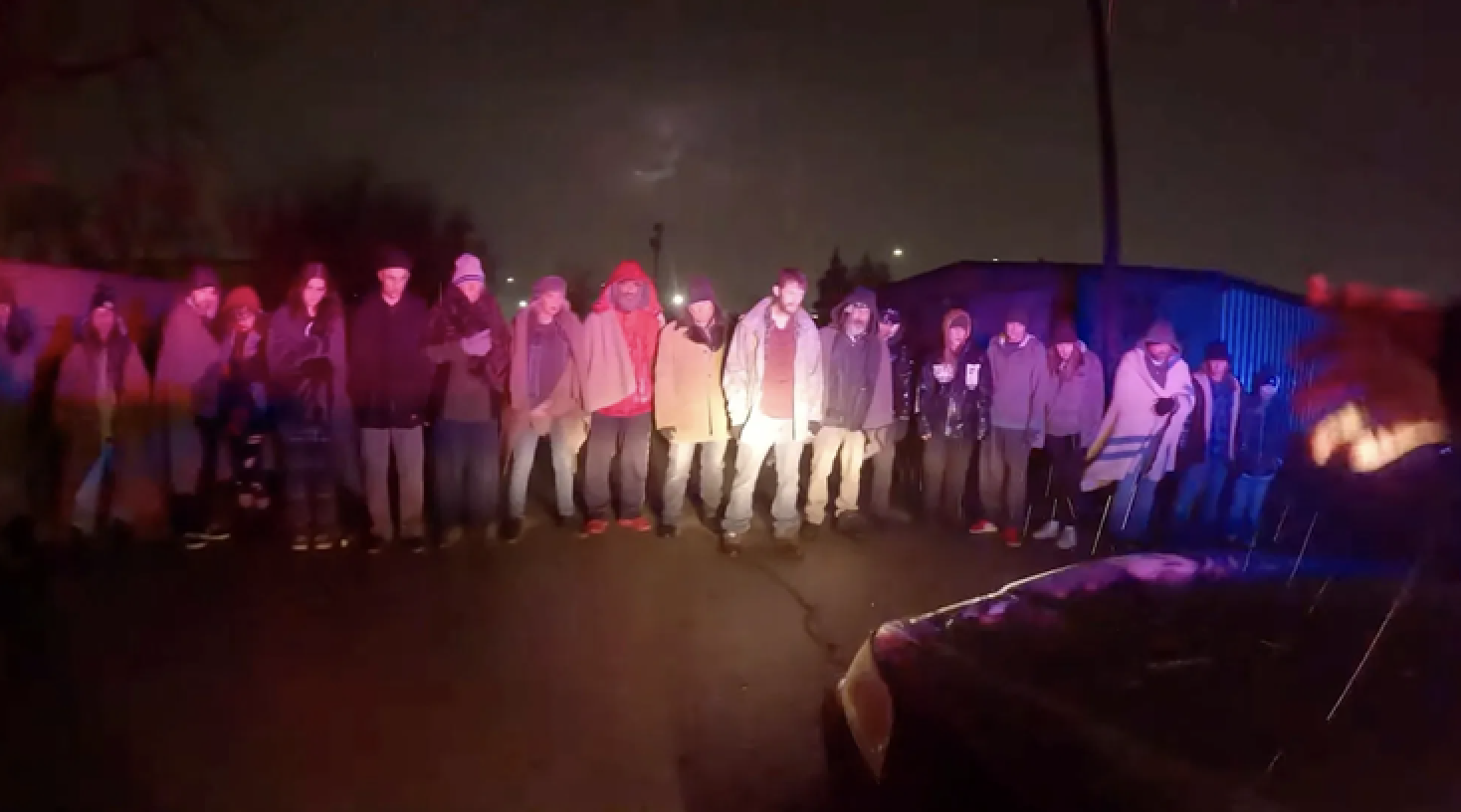
Communities like the one in Bodycam are not evil, they are full of good and/or struggling people fighting against the system that wants them to remain underfunded, overpoliced, and neglected.
Bodycam does know how to create and maintain tension, putting its conspiratorial cops through the wringer. Using typical found footage approaches to its scares, the horror goes to familiar yet effective places. Lingering shots and the unnatural and erratic behavior of the neighbors portends something great to fear. Even if it feels exploitative, it’s impossible to ignore that sinking feeling Bodycam delivers once it journeys to the source of horror.
Visually, the camerawork is as chaotic as the story. The entire story is purportedly told through body camera footage, but this ends up stunting the progression in understandable ways. In order to capture the supernatural terror that is lurking behind the officer’s every move, the perfectly timed camera leads to awkward confrontations that diminish any suspense built. It does, however, solve one typical annoyance of found footage with a solid explanation for why the filming continues, especially since the officers would want anything but this.
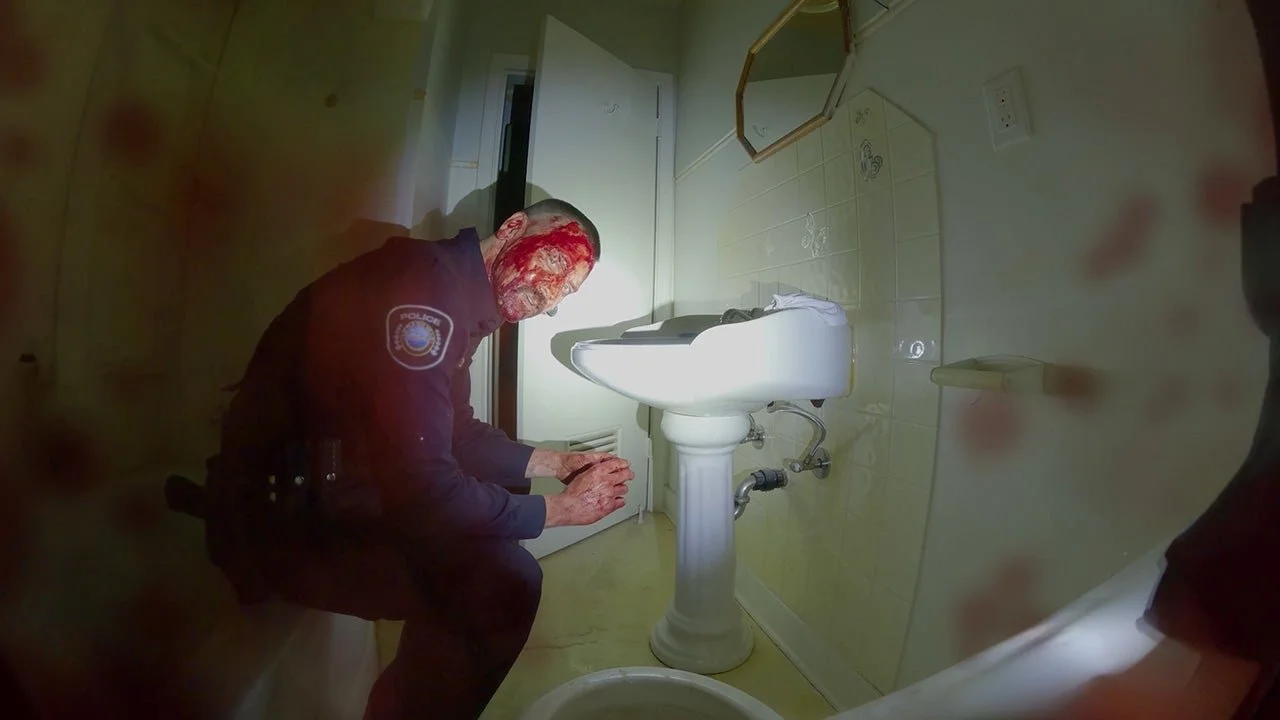
A few cool moments in an otherwise lackluster film characterize the missed opportunity that is Bodycam. Police brutality is a concept ripe for exploration in the horror genre, if given the respect and care it deserves. Some misguided characterization and a choppy, unfocused narrative prevent Bodycam from cruising above its limitations. The imagery alone should be sufficient for found footage enjoyers even if it doesn’t leave too big of an impression.
Overall Score? 5/10