New J-Horror Reminds Audiences that Journeys to the Spirit Realm are Best Never After Dark (SXSW)
Title: Never After Dark
First Non-Festival Release: TBD
Director: Dave Boyle
Writer: Dave Boyle
Runtime: 105 Minutes
Starring: Moeka Hoshi, Tae Kimura, Kento Kaku
Where to Watch: Check out where to find it here
This film’s review was written after its screening at the South by Southwest Film Festival in 2026.
Airi (Moeka Hoshi) travels Japan working as an in-demand medium. Since childhood, Airi has carried this power with the weight it deserves, especially after losing her older sister (Kurumi Inagaki) to a job years ago. Her latest job takes her to a remote inn that has been converted into a home for a wealthy woman (Tae Kimura) and her son (Kento Kaku), who doesn’t believe in any of the nonsense Airi is peddling. As she does her job, Airi identifies a disturbing presence within the home that lurks in the shadows but is unwilling to say what it wants. After a particularly terrifying close call, Airi attempts to leave before discovering someone, or something, doesn’t want to let her go.
Never After Dark scratches the 2000’s J-horror itch that so many rabid horror fans crave.
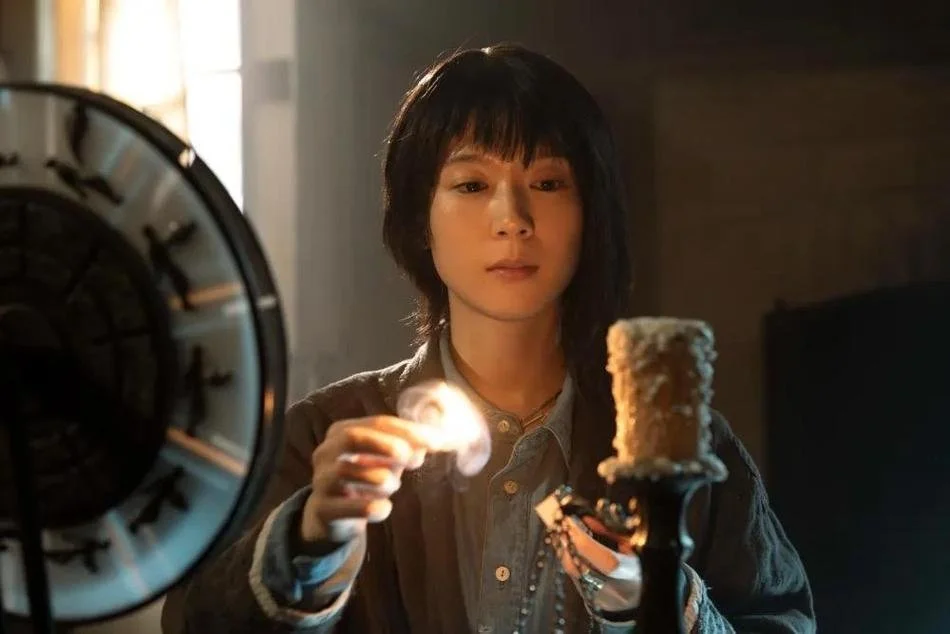
Wasting no time, Never After Dark establishes the eeriness of its setting through Airi’s investigation. Exploring the geography of the converted inn, the mystery deepens through initially innocuous discoveries. Troubling revelations push Airi to the realization that something is off with this haunting, and it’s shifted the way reality works. It lays the groundwork for the mystery that gradually unfurls into something unexpected. The specters that haunt both the inn and Airi reveal less than the terrifying clues left behind. The source of the horror is less about what the vengeful ghost can do versus what it hopes to accomplish with Airi and the occupants of the house.
Taking viewers on a breathless journey into the world of mediums and restless spirits, Never After Dark approaches its world building organically, trusting viewers to piece together the rituals and rules without Airi explaining too often. A wordless sequence of Airi setting up her station, entering the other side, and going about her duties explains far more in a much more compelling manner. Moments like this show that Never After Dark cares more about crafting its story and building suspense than making it easier for “second screen viewing”.
One of the most intriguing elements of Never After Dark arises from Airi’s dead sister, who still accompanies her on her jobs. A miniature twist in the first ten minutes gives more insight into Airi than an exposition dump ever could. Still haunted by the death of her sister [literally and metaphorically] and guilty for her perceived inaction, Airi’s approach to her work leads to tunnel vision while the moments after lead to careless frivolities. It’s an interesting dichotomy, one that even she has trouble discerning.
Visually, Never After Dark glides through its two worlds with style. Each time Airi transcends into the spiritual realm of the dead, the film takes on this beautiful shade of blue that signifies her entry. Never too saturated or otherwise distracting, the choice gives a certain lightness not often associated with death. Despite the innocuous looking tint, danger still lurks. Never After Dark captures the relentless supernatural assault with interesting camera angles that force focus on the more unique aspects of its lore.
Despite its moody, unique take on hauntings, Never After Dark finds itself always just short of greatness. Haunting imagery, chilling dialogue, and well-choreographed chase scenes still can’t get the supernatural chiller to take flight. In the end, these smaller elements do great work in establishing the film’s capabilities even if it doesn’t fully shine through.
Never After Dark is a solid J-horror haunter that harkens back to a simpler time in the genre. Its stripped-down story, setting, and cast allows writer/director Dave Boyle the opportunity to focus on building atmosphere and dread. The simplicity becomes its charm, especially when tied into its exceptionally interesting backstory and lore behind Airi and her profession. There’s a whole movie there, too. Fans of Asian horror cinema will find plenty worth searching for in Never After Dark.
Overall Score? 7/10