Title: Ürei
First Non-Festival Release: TBD
Director: Yerkezhan Baizhan
Writer: Yerkezhan Baizhan
Runtime: 80 Minutes
Starring: Akerke Kozaiyr, Tynyshgul Sultanberdieva, Asset Eszhan
Where to Watch: Check out where to find it here
This film’s review was written after its screening at the Fantastic Film Festival in 2026.
Families tend to bury their secrets and wish away their problems for the sake of maintaining status quo. Children, while a part of the family unit, are often disregarded, their needs considered more frivolous than those of their adult counterparts. They also unfortunately suffer the most from any decision made on their behalf far more than their parents ever will.
When Kalima (Akerke Kozaiyr) is sent away to live with her grandmother Amina (Tynyshgul Sultanberdieva) for misbehaving at home, the teenager meets the moment with as much grace as a kid can give. Her sadness at being separated from her parents is temporarily soothed by her grandmother, who is determined to make her happy. This is short-lived, as Kalima begins noticing strange quirks with her grandmother that frighten her. Kalima doesn’t know it yet but a dark secret from her grandmother’s past threatens to restrict Kalima’s freedom and destroy her very identity.
A capable, if messy, feature debut, Ürei is an effective and familiar tale of familial woe.
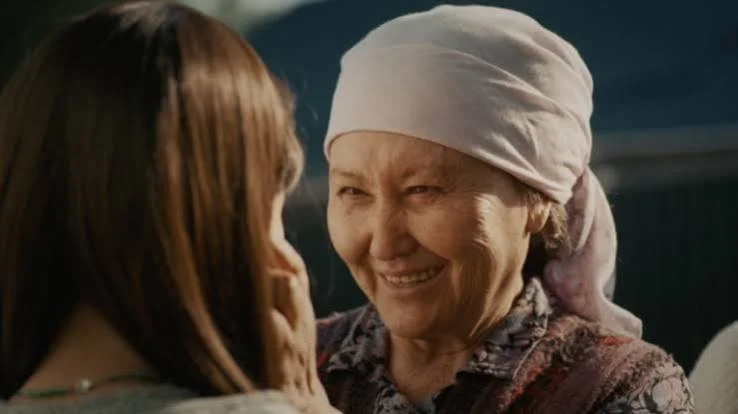
Loosely adapted from the short film of the same name, writer/director Yerkezhan Baizhan takes her feature debut in an unexpected direction. Its original vaguely supernatural threat is replaced by something more familiar but still haunting. Kalima quickly learns that Amina’s mental state has secretly declined following her husband’s death. The same sweet grandmother is there but buried underneath the weight of living alone and carrying secrets meant to be shared with her loved ones. This reframe gives Ürei an opportunity to opine on the ways parents fail their children.
The full weight of parental decisions always fall on children, so why are we so comfortable dismissing the real trauma parents can inflict? Parental guilt is a common theme throughout Ürei. There’s the more immediate B-plot of Kalima’s parents wrestling with their decision to leave her with her grandmother where they rationalize their efforts. Kalima must learn from her mistakes, and this is a great opportunity for her to disconnect and bond. Their refusal to give her any direct lifeline in case of emergency marginalizes her even before her grandmother’s own mental turmoil factors into the picture. The wrestling isn’t given full attention next to Kalima’s predicament, but it serves as a welcome bit of honesty that otherwise would be absent from Ürei.
It’s Amina’s guilt that drives the story. Family secrets unbeknownst to Kalima, and potentially even her parents, lead her down a road where she must pay for her grandmother’s sins. In a powerful performance from Tynyshgul Sultanberdieva, Amina’s past blends with her present in a believable and sympathy-inducing way. Guttural wails and flashes of lucidity convincingly demonstrate Amina’s mental decline. Sultanberdieva’s ability to vacillate between extremes makes her unpredictable character feel firmly grounded in reality. It can be a challenge to believably be terrifying and sympathetic, but Sultanberdieva accomplishes this along with Baizhan’s confident direction.
Given the appropriate weight of a horror villain with the nuance to understand an elderly person’s rapidly changing brain chemistry, Ürei takes a realistic approach to crafting its antagonist. Rarely portrayed as monstrous but still decidedly dangerous, Amina’s declining mental acuity serves as the obstacle Kalima must overcome. A teenager balancing the respect owed to elders in her culture with her understandable desire for self-preservation, it’s easy to sympathize with the girl, even if she doesn’t make the best decisions. It’s Kalima’s vulnerability that makes her such an engaging protagonist. Her character isn’t fleshed out too much, but a second act twist adds a messy, yet still compelling layer to the story that makes Amina’s dementia-fueled psychosis even more horrifying.
Steeped in the quiet realities of small-town living in Kazakhstan, Ürei works because of its lived-in feel. Its small-town vibes highlight a sense of community that is often glossed over in films like it. One of Kalima’s only allies is a local boy who realizes something is wrong when she disappears from view one day. His observation that something is wrong proves the utility of nosey neighbors. It’s harder to get away with terrible actions when you have an entire community looking out for you. Kalima now must convince others that something is more than just off about her grandmother. It’s in the failures of the community to address these smaller transgressions that lead to further danger. Ürei becomes more of a cautionary tale the further Kalima is transformed by her grandmother’s deteriorating mental state and abuse.
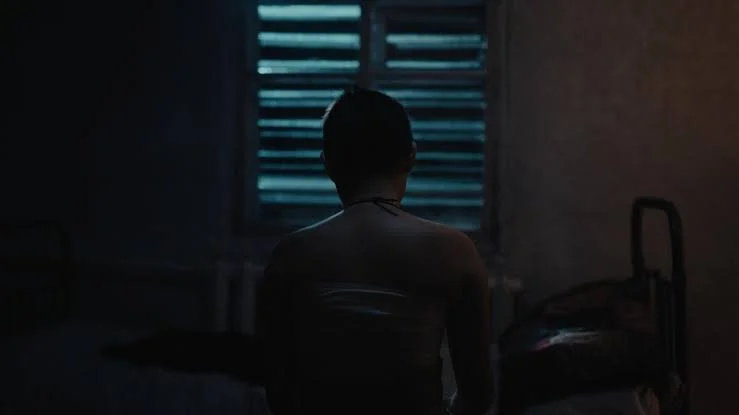
Despite all its charm, Ürei doesn’t bring all its ideas together, leaving its most interesting questions and choices on the table. Its short runtime leads to some stretched moments and repetition to its scenes. Outside of Kalima and Amina’s home, the characters and storylines feel underbaked. Sure, these two are the center of Ürei, but they are not given enough material on their own. Ürei even takes a big leap with one of its later character decisions, which could have led to a much more interesting examination of its problems, but immediately goes back on it. It’s understandable to a degree but it at least serves as one of the film’s scariest moments. While generally boasting solid production values for an indie film, it isn’t immune to some of the smaller issues that kill films. The audio sometimes doesn’t sound polished enough, especially during a few screams. Largely unnoticeable until the end, it doesn’t hit Ürei too hard but still makes it difficult to fully accept the nature of the story’s danger.
Kazakhstan is slowly becoming a country to watch in terms of horror. Along with the delightful Sweetie, You Won’t Believe It, Ürei is a charming, grounded horror effort from the country. Its universal story on the failures of parents gets intensely personal with Baizhan’s take on guilt and responsibility. Some storytelling shortcomings aside, Ürei is a slow-burn family mystery worthy of an audience’s investment.
Overall Score? 6/10