American Dollhouse (SXSW) is a Tired, Tepid Psychological Horror
Title: American Dollhouse
First Non-Festival Release: TBD
Director: John Valley
Writer: John Valley
Runtime: 87 Minutes
Starring: Hailley Lauren, Tinus Seaux, Kelsey Pribiliski
Where to Watch: Check out where to find it here
This film’s review was written after its screening at the South by Southwest Film Festival in 2026.
Aching for a new start without the need to have roommates, Sarah (Hailley Lauren) moves into her recently deceased mother’s crumbling house with the intention to fix it up. Her brother (Tinus Seaux) tries to talk her out of it due to Sarah’s inability to keep her life on the straight and narrow, as well as its sagging roof. When Sarah believes she is being stalked by a psychotic neighbor (Kelsey Pribiliski) who has a tragic past, she finds her own volatile behavior pushes away everyone around her. With no one believing her, Sarah is on her own to scare away the persistent uninvited guest.
American Dollhouse is a dull, listless psychological slasher that seeks to shock more than it actually does.
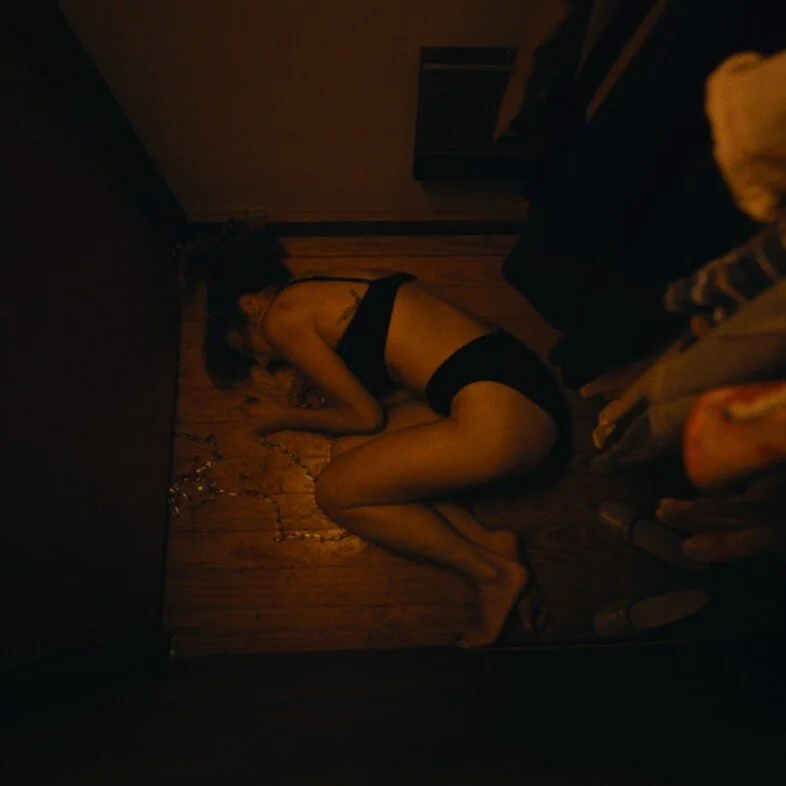
An ugly experience, American Dollhouse revels in its unpleasantness while shaping the story of the generic paranoid thriller. The obnoxiousness starts quickly with an introduction to the prickly Sarah and her nagging brother. From the get-go, the characters that populate the indie film embody this irritatingly quirky energy put on by its exhausting dialogue. Between Sarah and those around her, everyone seems to embody this weird persona that’s reminiscent of scumbag internet commenters of the early 2010s. Then, once the film introduces Sandy, it deflates even further.
While it isn’t impossible to feature a mentally disabled antagonist, there is a need to do so reasonably. American Dollhouse toes that line with little success. Sandy is unkempt, off-putting, and deranged while physically mirroring many observable traits of those afflicted with various developmental and mental health conditions. American Dollhouse does give Sandy an incredibly sympathetic backstory, but it still leaves a sour taste in the mouth with its decision to monsterize her anyway.
Beyond irritating, the dull characters of American Dollhouse carry the film through every narrative obstacle as they are incapable of using a bit of sense. Time after time, Sarah is presented with either an easy out or an opportunity to stop, assess, and enact a plan to end her torment. Instead, she tantrums inside her house pushing away anyone that could be helpful. This insistence to do everything herself, poorly, causes harm to those around her without solving her dilemma. She does have her own backstory that informs more about why she is so guarded, but it doesn’t go anywhere interesting.
In the end, the slasher lives because Sarah’s character boils down to yelling and swearing without taking any demonstrably helpful actions to her own benefit. It’s frustrating, and it doesn’t even appear to further any narrative point or character development.
Boasting a solid scare or two and maintaining just enough tension to skate by, American Dollhouse twists the knife further as it inches toward the glow of its Christmas light drenched finale. Writer/director John Valley understands how to craft suspense, stringing together a series of gradually escalating irritations into something to fear. While much of the fear comes from Sandy’s state of mind, the tension arises from how Sarah wriggles her way out of the situation. Unfortunately, it evaporates every time the audience is reminded of the character work done for both Sandy and Sarah.
While it generally fails to stand out from the crowd of similar genre films, what is most impressive about American Dollhouse is its production design. Both houses feel appropriately lived in, creating an authentic feel to the movie that gets brighter every time the camera pans out to the quaint suburban street separating the two homes. Evoking a sense of familiarity and danger, it works to the film’s advantage, especially when certain quirks are explained later on.
Dark, repetitive, and dour, American Dollhouse constructs a slasher that refuses to break free from the largely mediocre conventions that formed in the 1980s. Aside from some nice production designs and a few decent scares, there isn’t much substance here. Goofy exploitation elements, iffy performances, and a commitment to boring, tired tropes makes American Dollhouse feel like a dated children’s game in the end.
Overall Score? 4/10